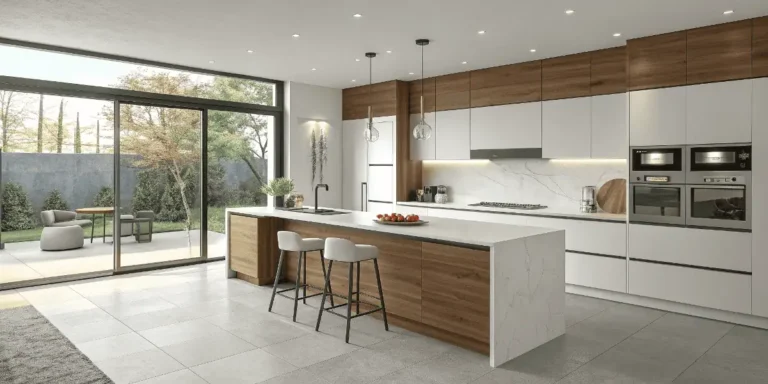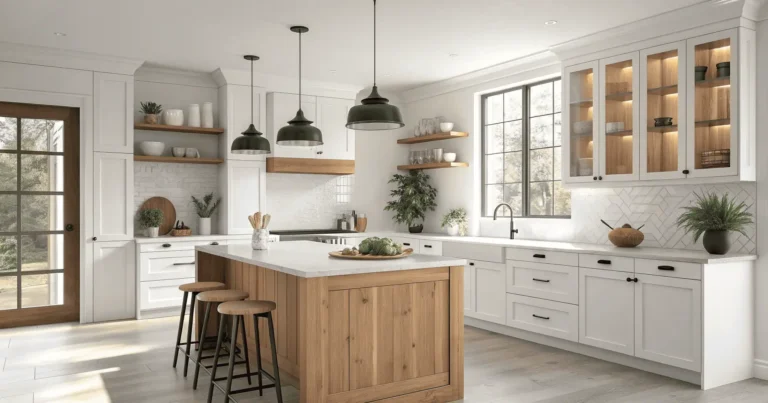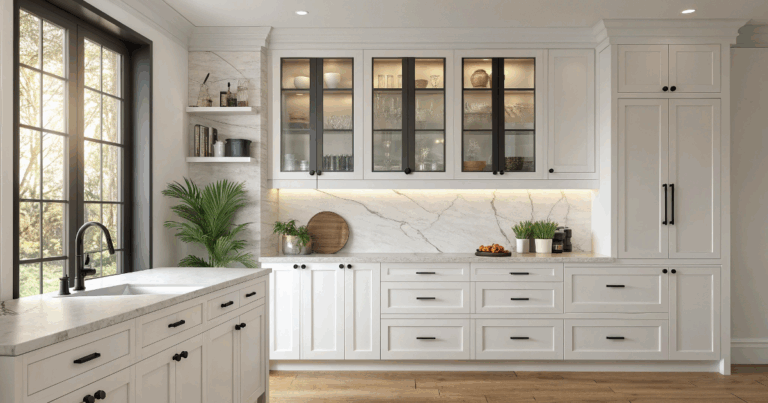
Kitchen Storage and Organization Ideas: 12 Smart Ways to Maximize Every Inch
Introduction
The best kitchen storage and organization ideas do not start with buying more containers — they start with removing the one obstacle between you and the thing you need. A pot buried at the back of a deep cabinet, spices stacked three rows deep, baking sheets piled so the one you want is always at the bottom: these small frustrations are storage problems, and every one of them has a fix. Whether you have a generous family kitchen or a compact one where every inch counts, the twelve ideas below put wasted cabinet depth, dead corners, empty walls and forgotten vertical space to work — most of them in a single weekend, and many for under $50.
What Is Kitchen Storage and Organization?
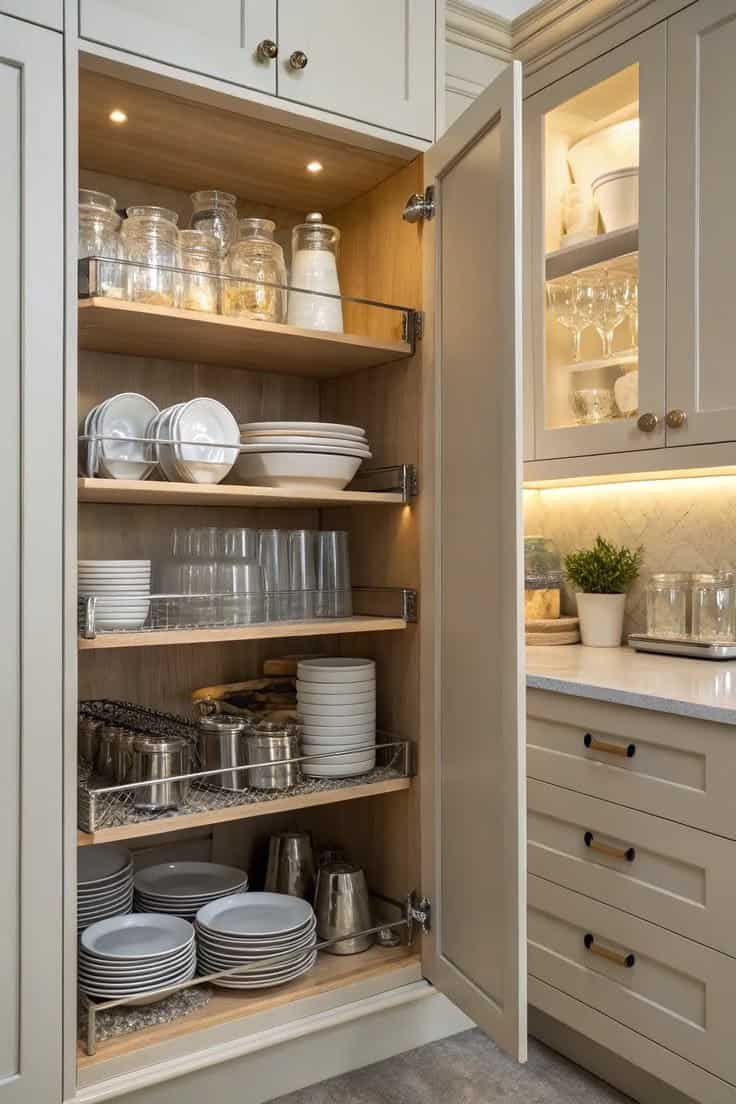
Kitchen storage is where things live; kitchen organization is how easily you can find, reach and put them back. Good organization follows one principle: store items where you use them, grouped in zones — cooking tools near the stove, dishes near the dishwasher, coffee supplies together by the outlet. When everything has a zone and a home, counters stay clear, cooking gets faster, and you stop buying duplicates of things you already own but cannot find.
It matters even more in smaller homes. The same zoning and vertical thinking behind smart tiny kitchen design can make a standard kitchen feel twice as capable — and if you are planning cabinets from scratch, our complete guide to kitchen cabinets ideas covers the layouts and styles to build storage in from the start.
12 Kitchen Storage and Organization Ideas That Actually Work
1. Pull-Out Shelves and Drawers in Base Cabinets
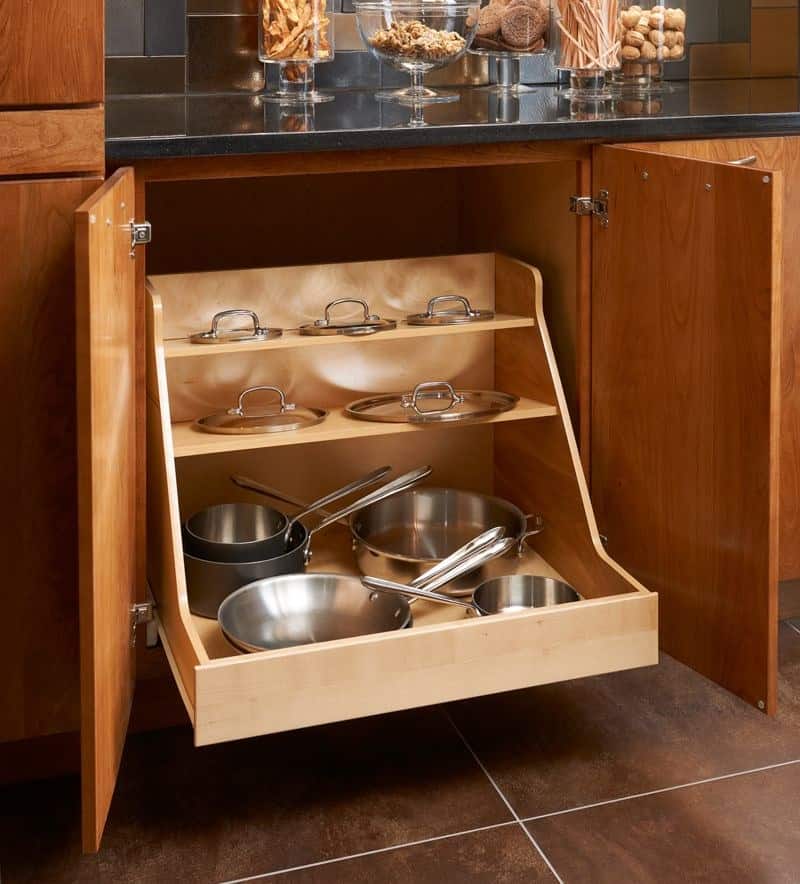
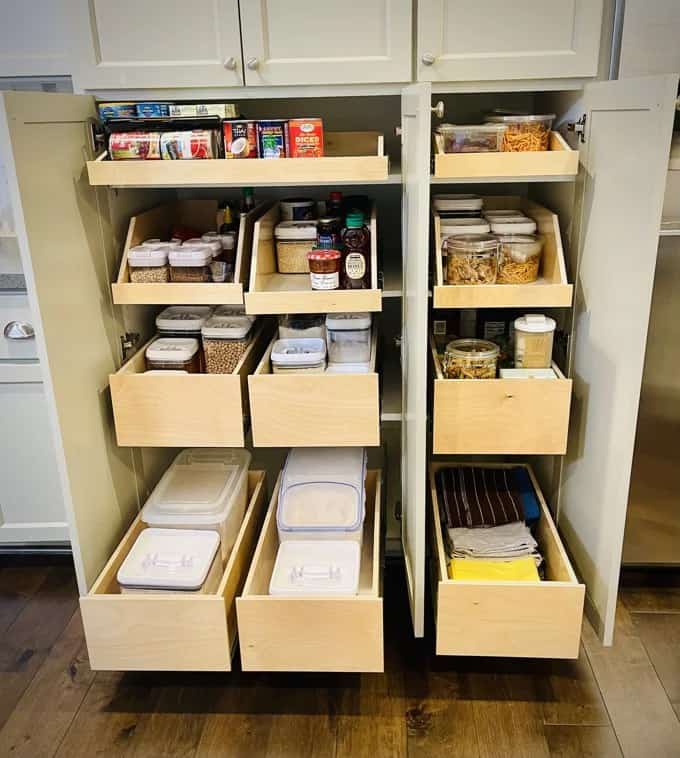
Deep base cabinets have a design flaw: the back row is nearly unreachable. Pull-out shelves fix it by bringing the shelf to you. Full-extension roll-out trays slide the entire depth of the cabinet into the room, so a heavy Dutch oven no longer means kneeling and digging past everything in front. Retrofit kits mount to the cabinet floor or sides in under an hour, and rated slides handle 75–100 lbs — enough for cast iron and small appliances. This single upgrade is the highest-impact change in all of kitchen cabinet organization.
2. Create Pantry Zones with Clear, Labeled Containers
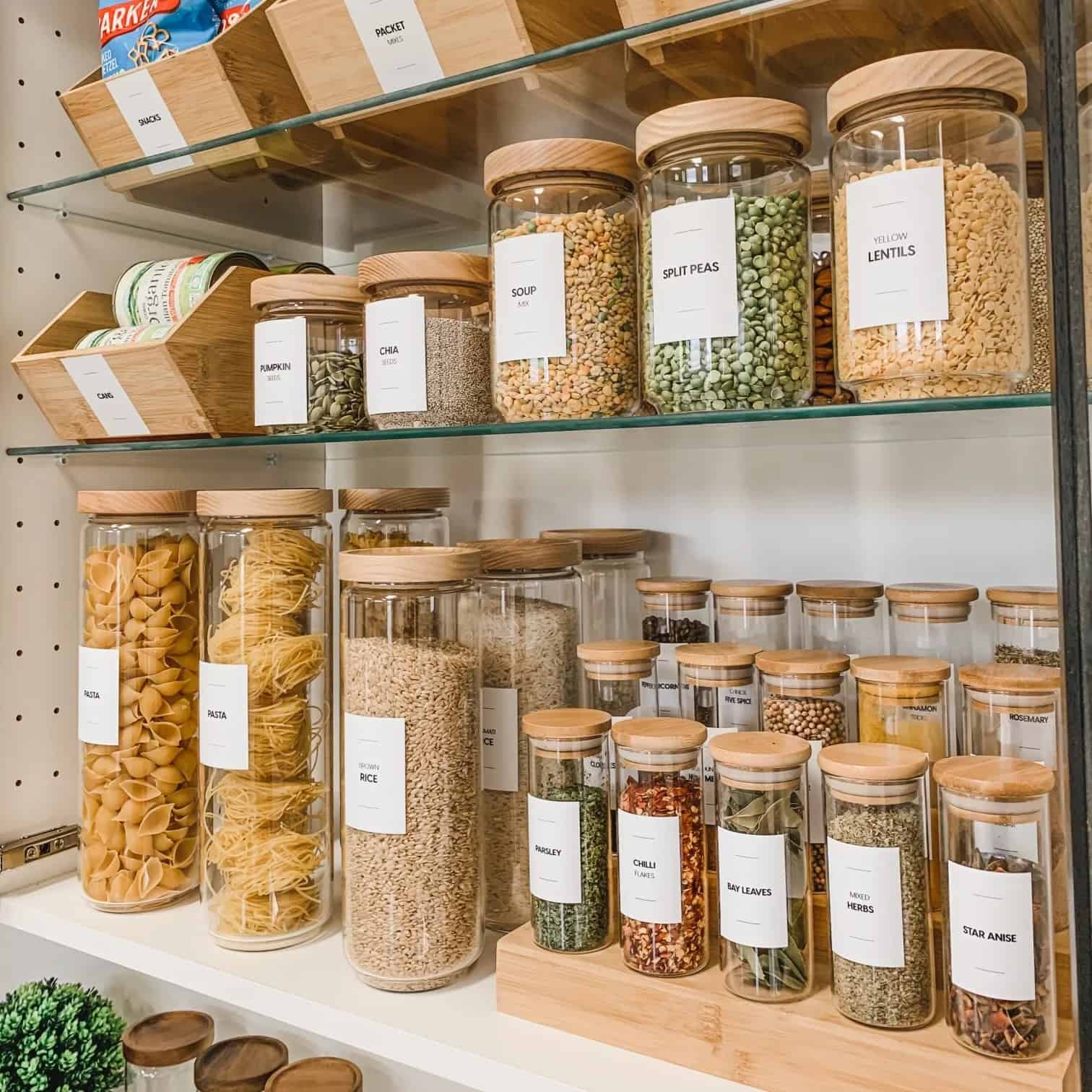
Pantry organization ideas succeed or fail on visibility. Decant flour, rice, pasta and snacks into clear, stackable, airtight containers — you can see what you have, nothing leaks, and square shapes waste no space. Then organize in zones: baking together, breakfast together, canned goods together, with the oldest items at the front (the “first in, first out” rule restaurants use). Label every container, including the date for bulk staples. A zoned pantry cuts grocery duplicates, speeds up weeknight cooking, and makes a five-minute tidy-up actually possible.
3. Add a Slim Pull-Out Pantry Beside the Fridge or Range
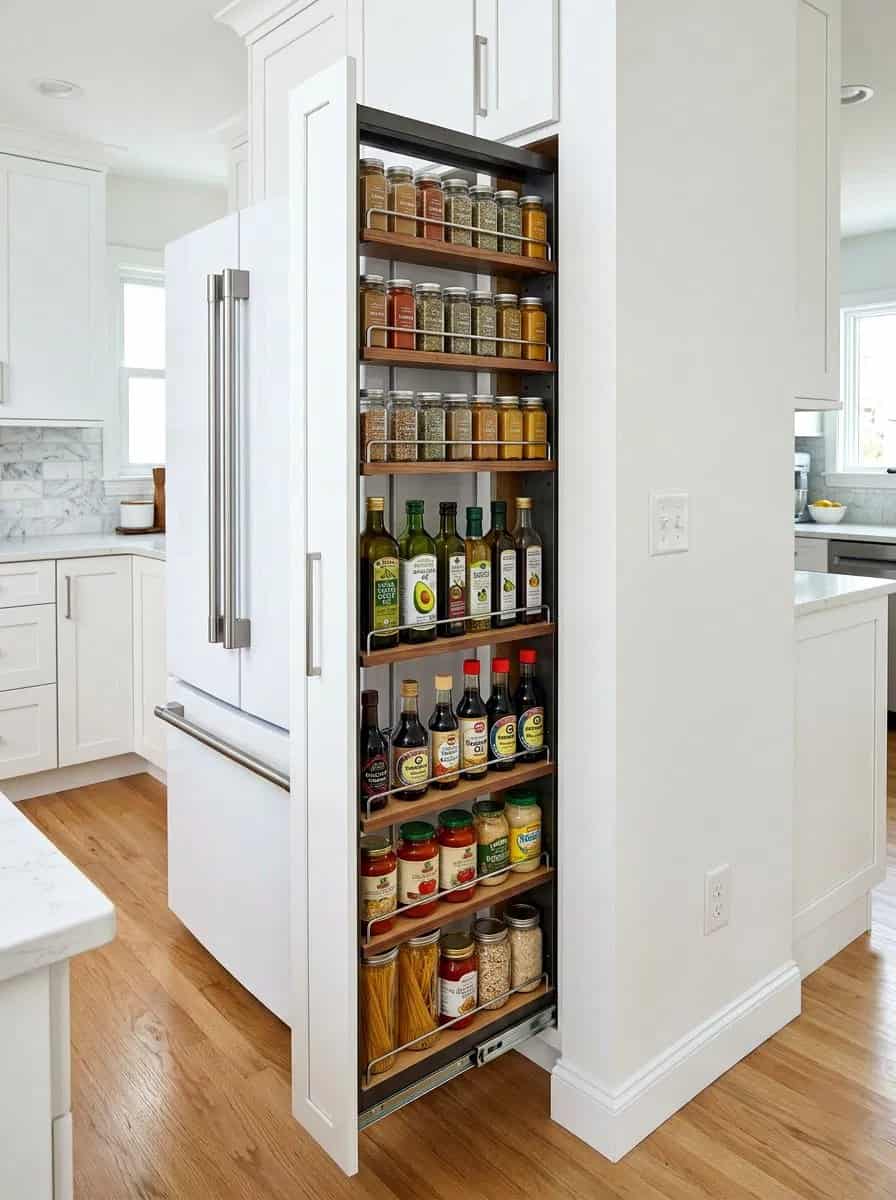
That awkward 6–12 inch gap beside the fridge or between cabinets is a pantry waiting to happen. Slim pull-out units on casters or rails slide into narrow spaces and hold a surprising amount: oils, vinegars, sauces, spice jars and canned goods, all visible from both sides. Tall pull-out pantry columns work the same trick at full height in a single cabinet. Measure the opening carefully, check the weight rating — full jars add up fast — and keep daily items at waist height, with rarely used bottles at the top or bottom.
4. Kitchen Drawer Organization with Dividers and Inserts
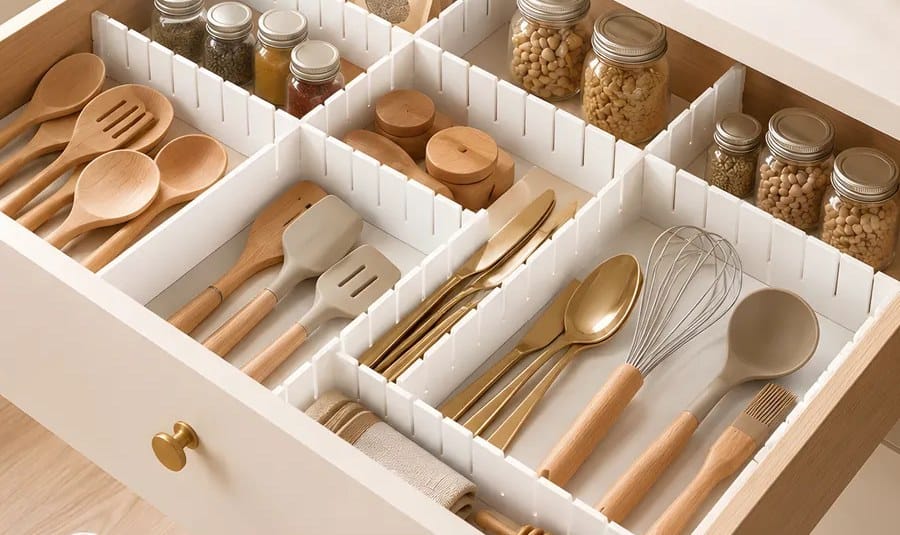
A drawer without dividers is just a box things slide around in. Adjustable drawer dividers and inserts turn one junk drawer into a grid where every tool has a slot: an expandable cutlery tray for flatware, a diagonal insert for long utensils, a peg system that keeps stacked plates and bowls from shifting, and a dedicated lid organizer so container lids stop vanishing. Kitchen drawer organization is cheap — most inserts cost $10–$30 — and it is the fastest win on this list: one drawer, one insert, ten minutes, permanent order.
5. Give Spices a Real Home: Drawer, Door Rack or Turntable
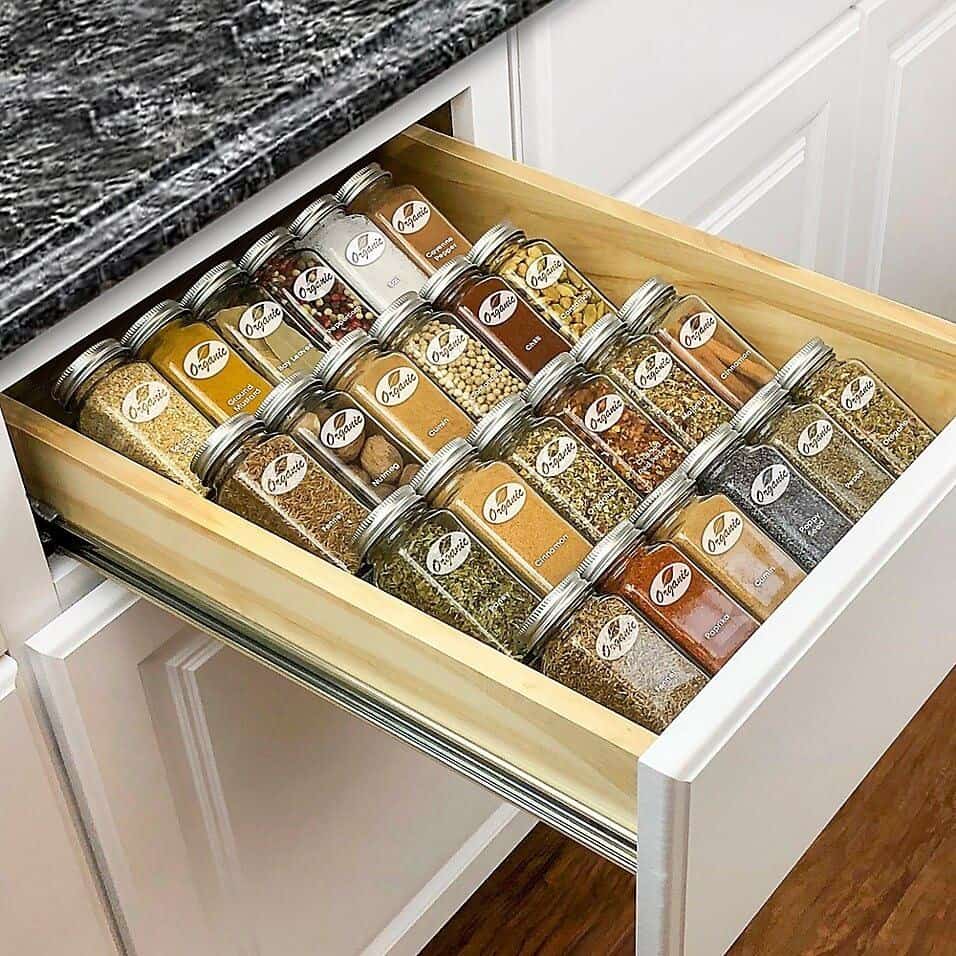
Spices fail in two places: a deep cabinet where jars hide behind each other, and a countertop rack that steals prep space. The best spice storage ideas keep them near the stove but fully visible: a shallow drawer with a tiered insert so every label reads at a glance, a rack mounted inside a cabinet door, a slim pull-out beside the range, or a two-tier turntable in a corner cabinet. Decant into uniform jars, label the tops if they live in a drawer, and sort alphabetically or by cuisine — whichever matches how you actually cook.
6. Corner Cabinet Solutions: Lazy Susans and Swing-Out Shelves
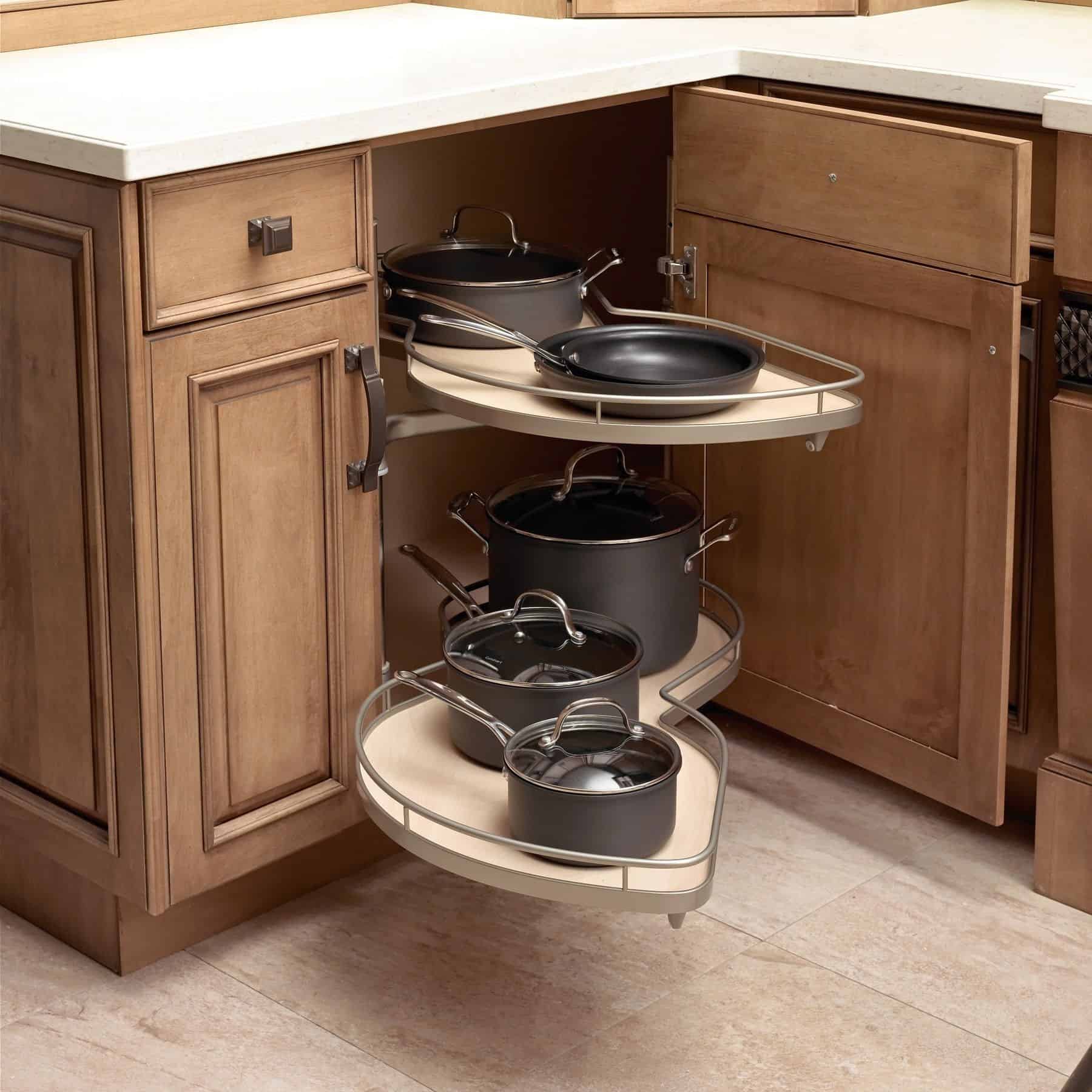
Blind corner cabinets swallow more kitchen gear than any other space — and return the least of it. A lazy Susan turntable is the classic fix: one spin brings the back row to the front, and two-tier versions double the usable surface for oils, sauces and canned goods. For deeper corners, kidney-shaped swing-out shelves and pull-out corner units carry the whole shelf out into the room. Measure your corner’s width, depth and door opening before ordering, because corner hardware is the one category where a half-inch genuinely matters.
7. Store Trays, Boards and Pans Vertically
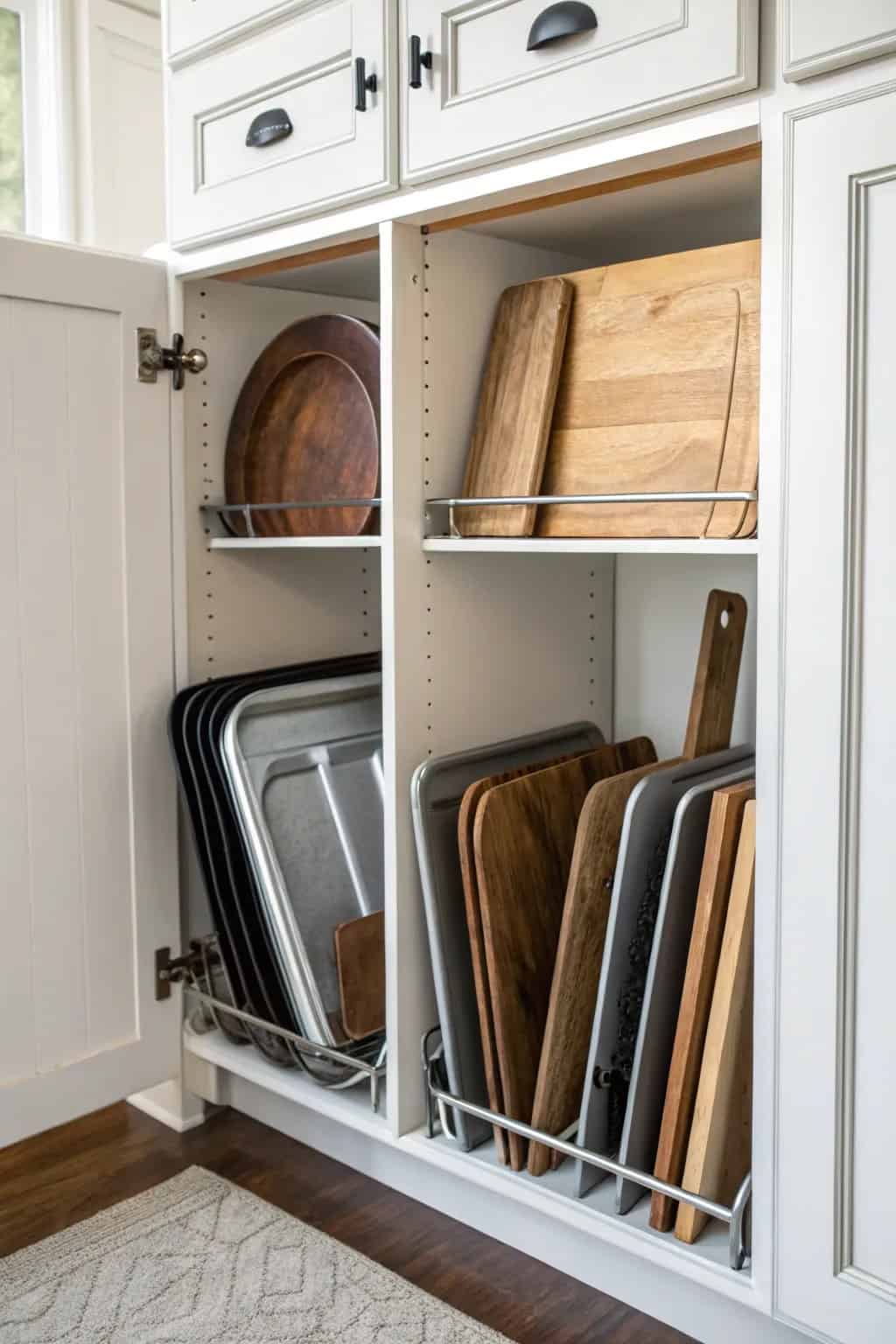
Flat stacking is why the baking sheet you need is always at the bottom of the pile. Vertical kitchen storage flips everything on its side: upright dividers, tension rods or a simple file-style rack inside a lower cabinet hold baking sheets, muffin tins, cutting boards and serving trays like books on a shelf, so each one slides out on its own. The same trick works for pot lids in a door-mounted rack and for pans in a vertical rack. It costs almost nothing, needs no tools beyond a tension rod, and instantly ends the avalanche.
8. Use the Inside of Cabinet Doors
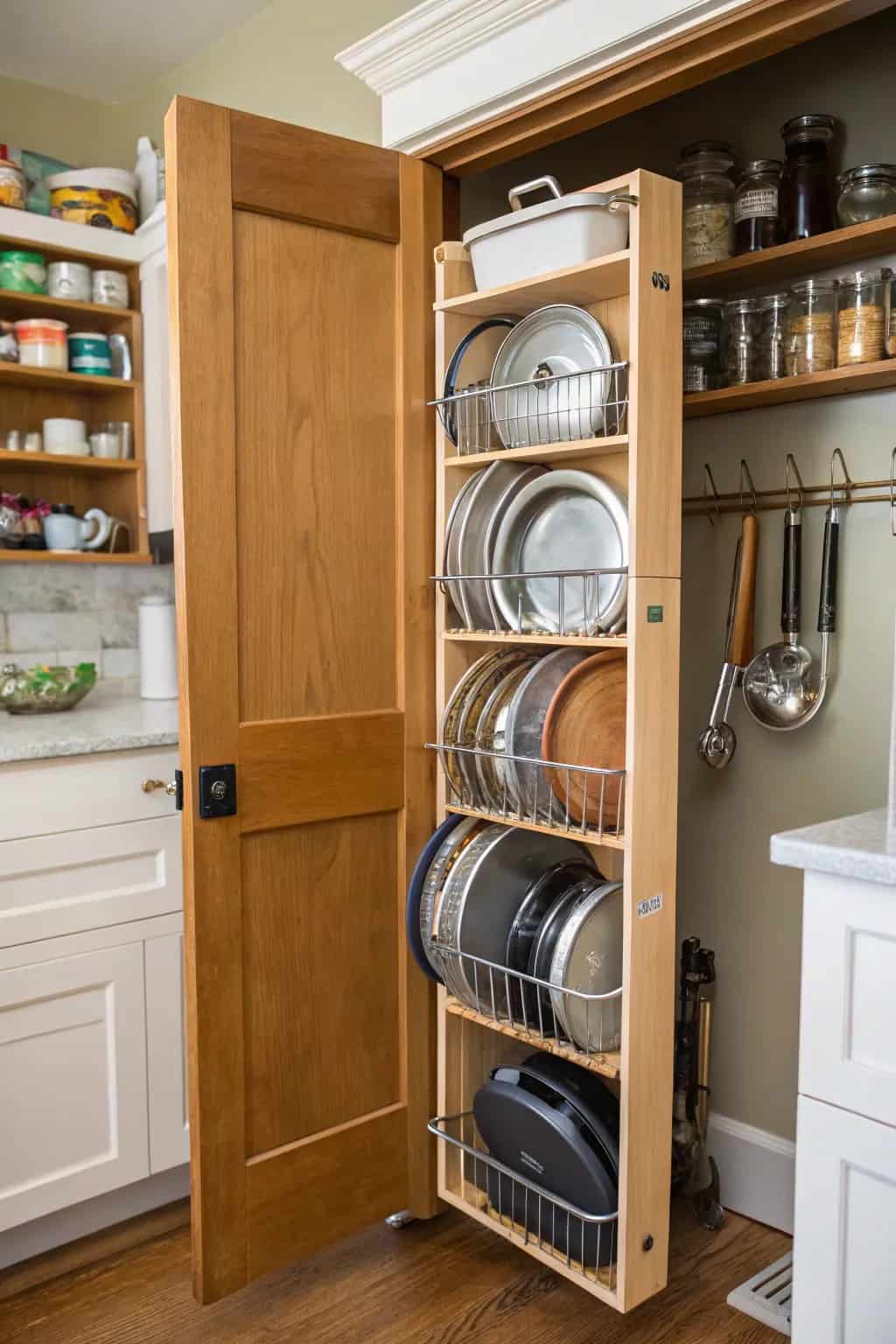
Every cabinet door is a storage surface you already own. Slim door-mounted racks hold spice jars, wraps and foil (a magazine file screwed inside the door works beautifully), measuring cups, and cleaning supplies under the sink. Adhesive hooks hang pot lids by their handles — two hooks per lid — and over-the-door racks on a pantry door add a whole column of shelving without touching a wall. Just check the clearance: door storage must clear the cabinet’s shelves and hinges when it closes, so measure the gap before you mount anything.
9. Under-Sink Organization That Works Around the Pipes
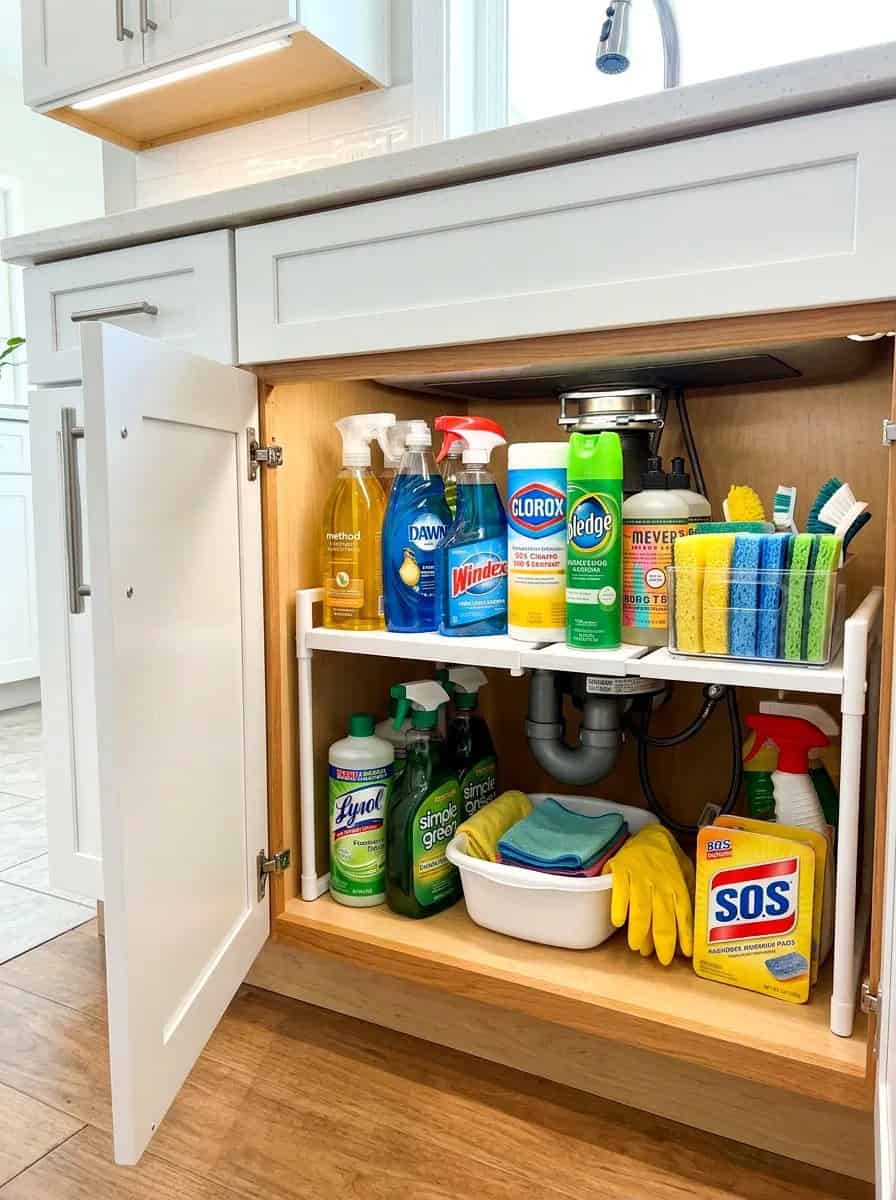
The under-sink cabinet is awkward — pipes in the middle, dark corners, everything tipped over. A two-tier stackable organizer built around the plumbing doubles the floor space, and a pull-out caddy keeps sprays and dishwasher pods from migrating to the back. Hang trash bags on a roll or tension rod on the cabinet wall, line the base with a waterproof mat to catch drips, and keep only cleaning supplies here — food and pans do not belong next to chemicals. Good under-sink organization takes twenty minutes and stays tidy because everything finally has a fixed place.
10. Go Vertical: Shelf Risers, Above-Cabinet Bins and Toe-Kick Drawers
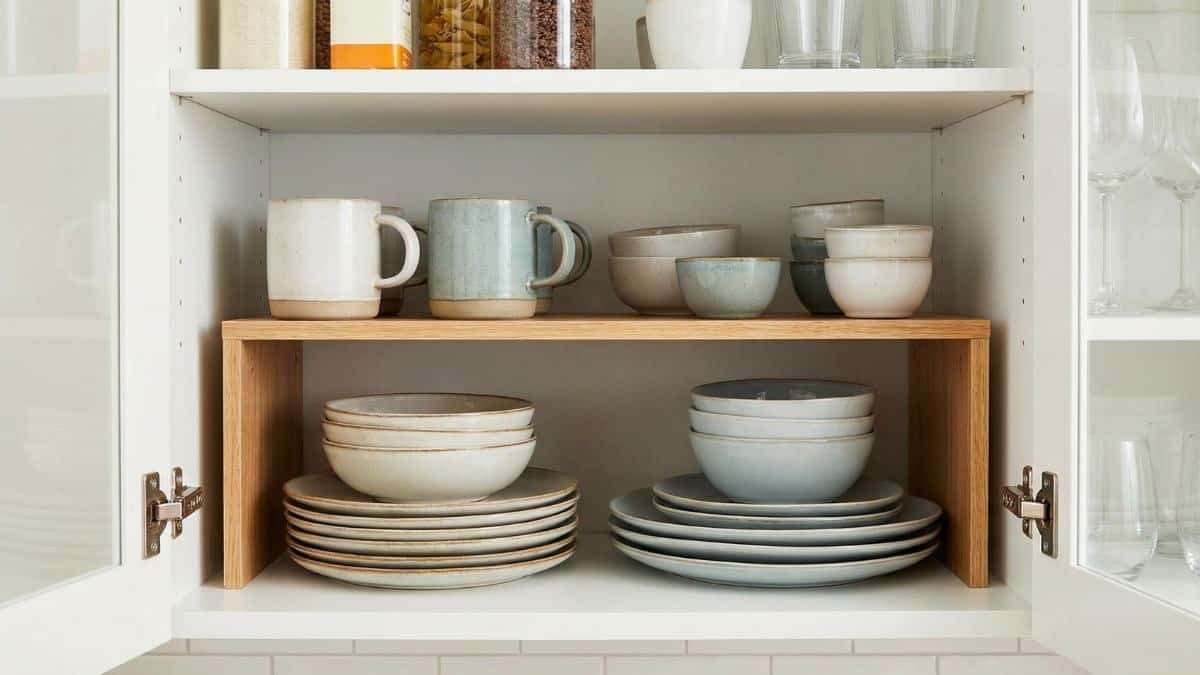
Most cabinets waste the top half of every shelf. Freestanding shelf risers split that dead air into two levels — mugs above, bowls below — and under-shelf baskets clip on to hold wraps, lids and packets. Higher up, the space above wall cabinets fits labeled bins for rarely used items like holiday serveware; our guide to top of kitchen cabinet decor shows how to make that zone look styled rather than stored. Even the 4-inch toe-kick under your base cabinets hides a shallow drawer, perfect for baking sheets and linens.
11. Wall Storage: Rails, Hooks, Magnetic Strips and Pegboard
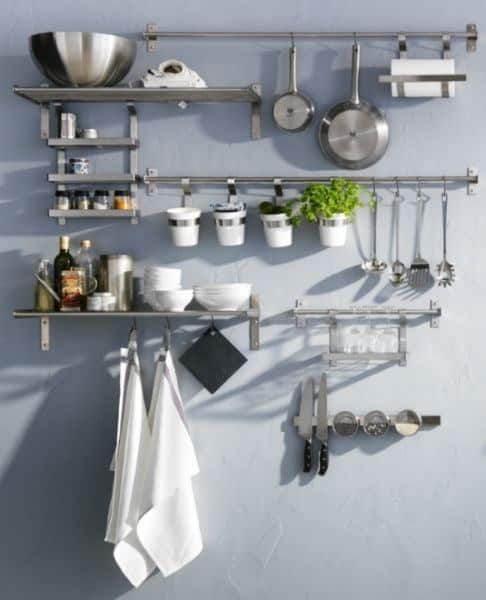
Walls are the largest unused storage surface in most kitchens. A rail with S-hooks along the backsplash holds ladles, spatulas and scissors at arm’s reach; a magnetic knife strip replaces a bulky counter block and keeps blades visible and dry; a pegboard panel adjusts endlessly as your tools change; and a ceiling or wall pot rack frees an entire cabinet by hanging your heaviest cookware in open air. Wall storage costs less than any cabinet upgrade, keeps daily tools at comfortable reach height, and gives a working kitchen that professional, everything-in-view confidence.
12. Open Shelving and a Rolling Cart: Small Kitchen Storage Ideas That Add Space
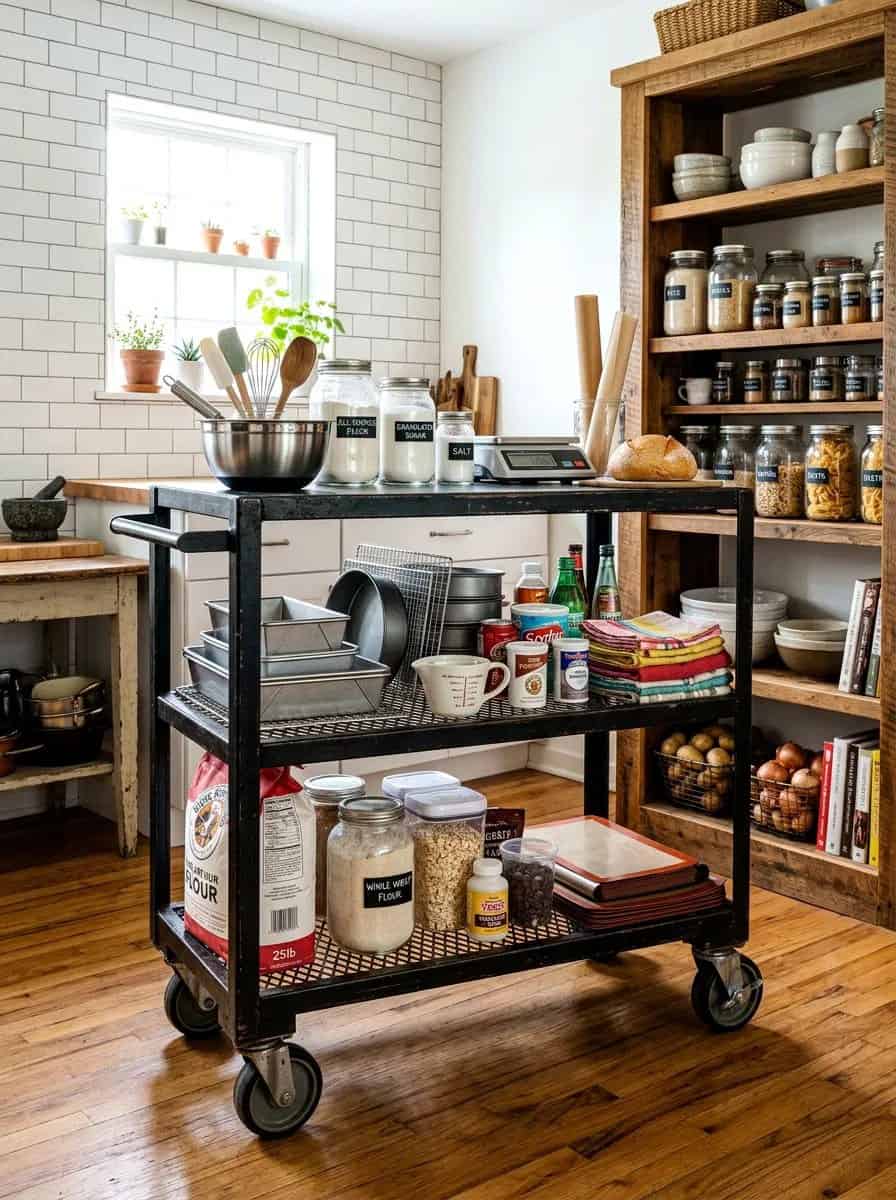
When cabinets run out, add storage that does not need a renovation. Open shelves hold everyday dishes and glassware where you can grab them, and styled well they double as decor — our kitchen shelf decor ideas show how to keep them looking intentional, not cluttered. A rolling cart becomes a movable pantry, coffee station or extra prep surface and parks in a gap when not in use. In a compact room, pair these with space-smart furniture like the small kitchen table ideas that fold, extend or tuck away.
Kitchen Storage Solutions Compared: Problem, Fix and Cost
| Storage problem | Best solution | Typical cost | Effort |
|---|---|---|---|
| Pots lost at the back of deep cabinets | Pull-out shelves / roll-out trays | $40–$150 per cabinet | 1 hour, basic tools |
| Chaotic pantry, duplicate groceries | Clear containers + zones + labels | $25–$80 | One afternoon |
| Spices hidden or cluttering counters | Spice drawer insert / door rack | $12–$40 | 15 minutes |
| Dead blind corner | Lazy Susan / swing-out shelves | $25–$200 | 30–60 minutes |
| Baking sheets in a heavy stack | Vertical dividers / tension rods | $8–$30 | 10 minutes |
| Junk drawer chaos | Adjustable drawer dividers | $10–$30 per drawer | 10 minutes |
| Under-sink mess | Two-tier organizer + caddy | $20–$45 | 20 minutes |
| No pantry at all | Slim pull-out / rolling cart | $35–$180 | 30 minutes |
| Wasted space above cabinets | Labeled bins / styled baskets | $15–$50 | 20 minutes |
| Tools crowding drawers and counters | Wall rail, hooks, magnetic strip | $15–$60 | 30 minutes |
Practical Tips for Kitchen Organization That Stays Organized
- Empty, edit, then organize. Pull everything out of one cabinet at a time. Donate duplicates, toss anything expired or broken, and only then put things back — organizers cannot fix owning too much.
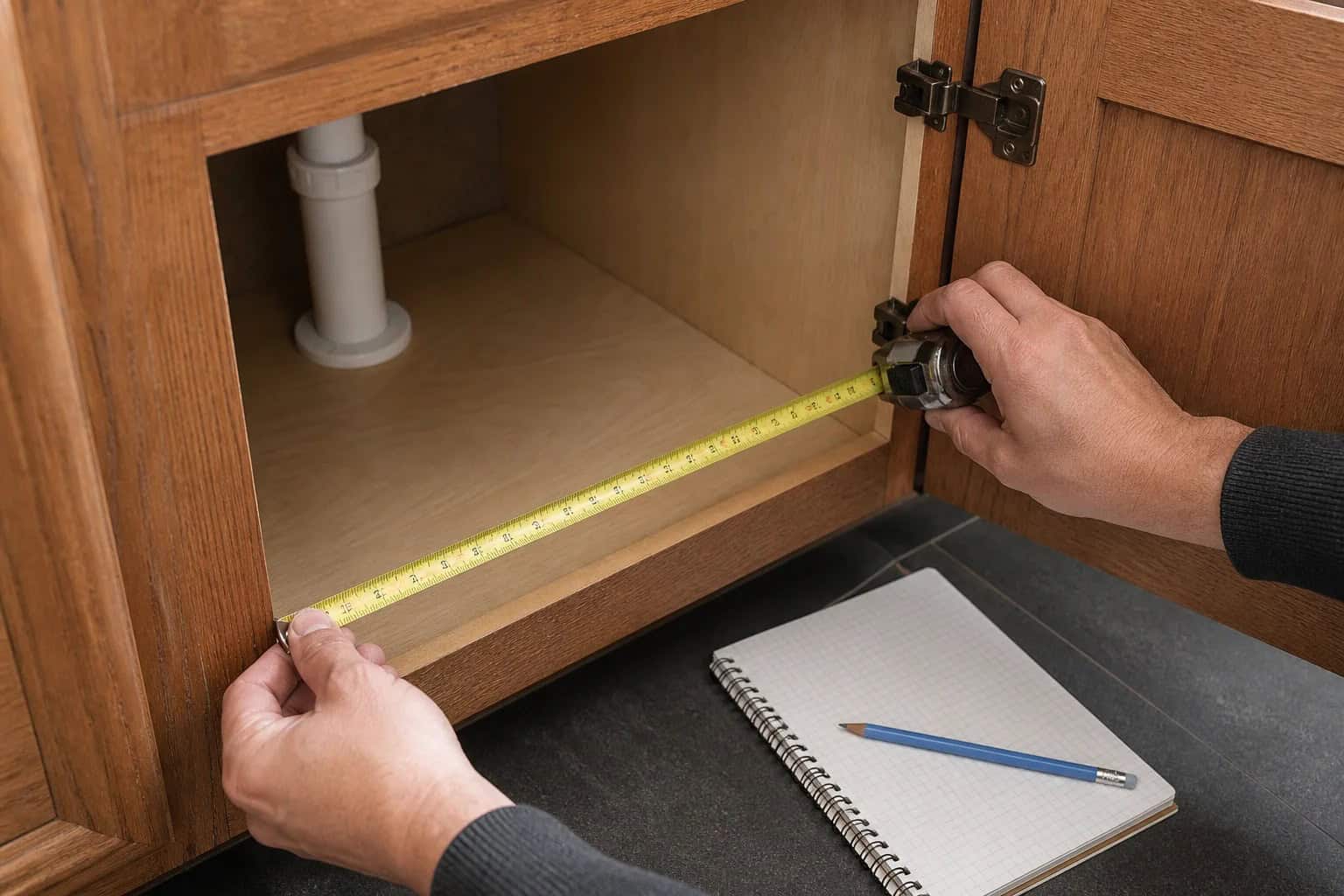
- Measure before you buy. Interior width, depth and height, plus door clearance. Most failed organizers are simply the wrong size by half an inch.
- Zone by task, not by object type. Cooking zone by the stove (oils, spices, pans, utensils), prep zone by the main counter (boards, knives, mixing bowls), cleanup zone by the sink and dishwasher (dishes, glasses, cleaning supplies).
- Keep daily items between knee and shoulder height. Heavy and rarely used items go low or high; the prime middle shelf belongs to what you touch every day.
- First in, first out. New groceries go behind old ones in the pantry and fridge, so nothing quietly expires at the back.
- Label everything you decant. Container, contents and date — future you will be grateful, especially for look-alike staples like flour and powdered sugar.
- Do one cabinet a week. A whole-kitchen overhaul stalls; one finished, satisfying cabinet builds the habit that keeps the system alive.
Frequently Asked Questions
What is the best way to organize kitchen cabinets? Start with zones: group items by the task they serve and store each group where that task happens. Then fix access — pull-out shelves for deep base cabinets, a lazy Susan for corners, dividers for drawers — and decant pantry staples into clear, labeled containers so you can see everything at a glance.
How do I maximize storage in a small kitchen? Use vertical space first: shelf risers inside cabinets, storage above the cabinets, rails and hooks on walls, and the insides of cabinet doors. Add a slim pull-out or rolling cart instead of furniture, store trays and boards vertically, and relocate rarely used appliances out of the kitchen entirely.
What is the best storage for pots and pans? A deep drawer or pull-out shelf near the stove, with lids stored separately in a door rack or vertical divider. If cabinet space is truly short, a wall or ceiling pot rack keeps heavy cookware accessible and frees a whole cabinet.
How much do kitchen storage upgrades cost? Most of the ideas in this guide are inexpensive: dividers, risers and door racks run $8–$40 each, pull-out shelf kits $40–$150 per cabinet, and a full weekend of upgrades for an average kitchen typically lands between $150 and $400 — far less than new cabinetry.
Where should spices be stored? Near the stove but away from its heat and steam, which degrade flavour: a tiered drawer insert, an inside-door rack, a slim pull-out beside the range, or a turntable in a nearby cabinet. The rule is visibility — if you can see every label at once, the system works.
Conclusion
Great kitchen storage is not about owning the perfect organizer — it is about giving everything a zone, a home and a clear path back into your hand. Start with the fix that removes your daily frustration, whether that is a pull-out shelf for the pot cabinet, dividers for the junk drawer or zones for the pantry, and let one tidy cabinet motivate the next. Inch by inch — a riser here, a rail there, a turntable in the corner — these kitchen storage and organization ideas turn the kitchen you have into the kitchen that feels twice the size.