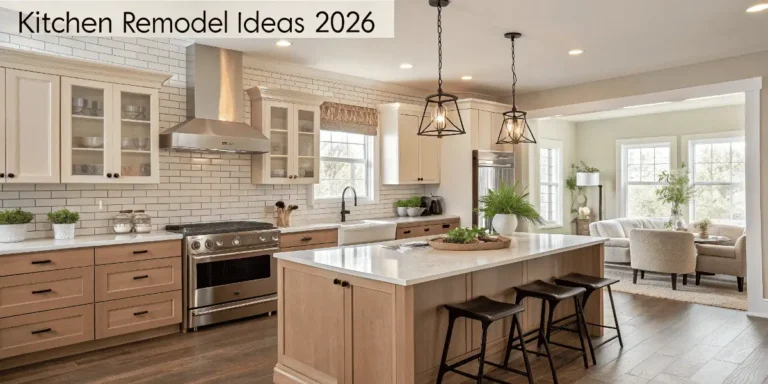
Kitchen Flooring Ideas: 10 Waterproof, Durable & Stylish Floors for 2026
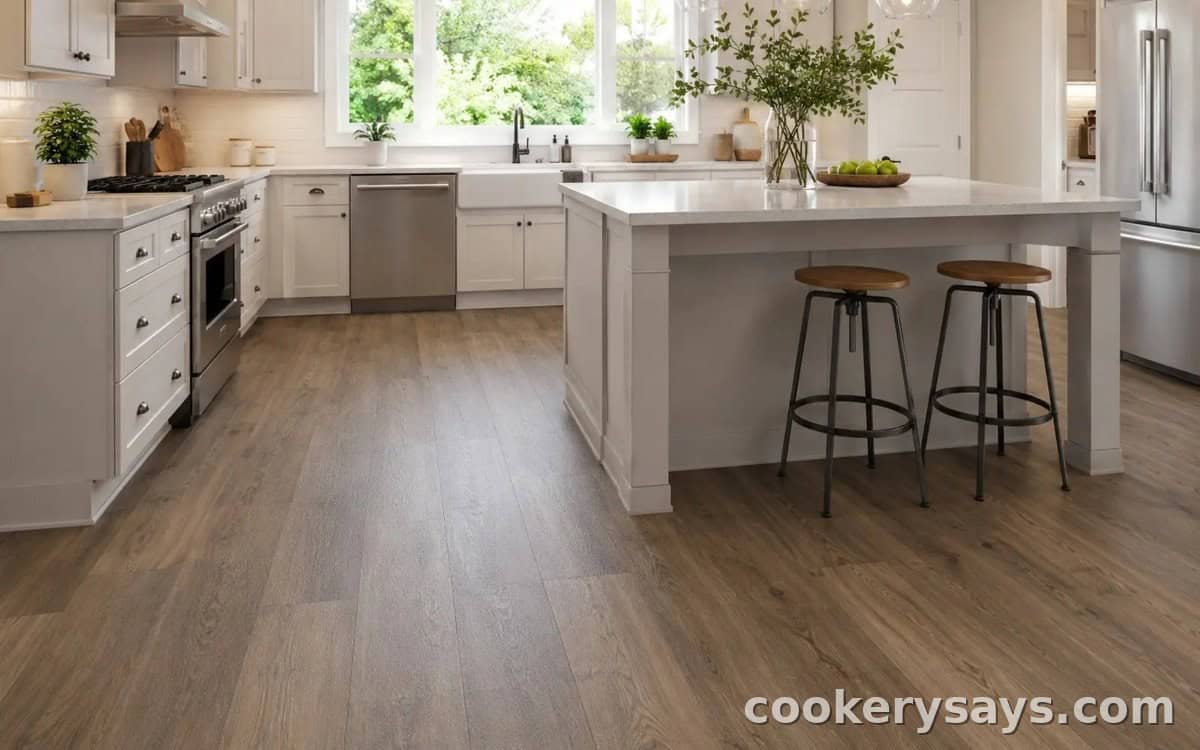
Introduction
The best kitchen flooring ideas have to survive the hardest-working room in the house: boiling spills, dropped pans, muddy paws, chair legs dragged a thousand times a year. Get the floor right and it quietly makes the whole kitchen look better and feel better to cook in; get it wrong and you live with stains, warping or aching feet for a decade.
The good news: waterproof kitchen flooring is now available at almost every budget, and the looks — warm oak planks, marble-look tile, terracotta, checkerboard — have never been better. Below are the 10 kitchen flooring ideas worth your money, with honest installed costs, water resistance and durability for each.
What Is the Best Flooring for a Kitchen?
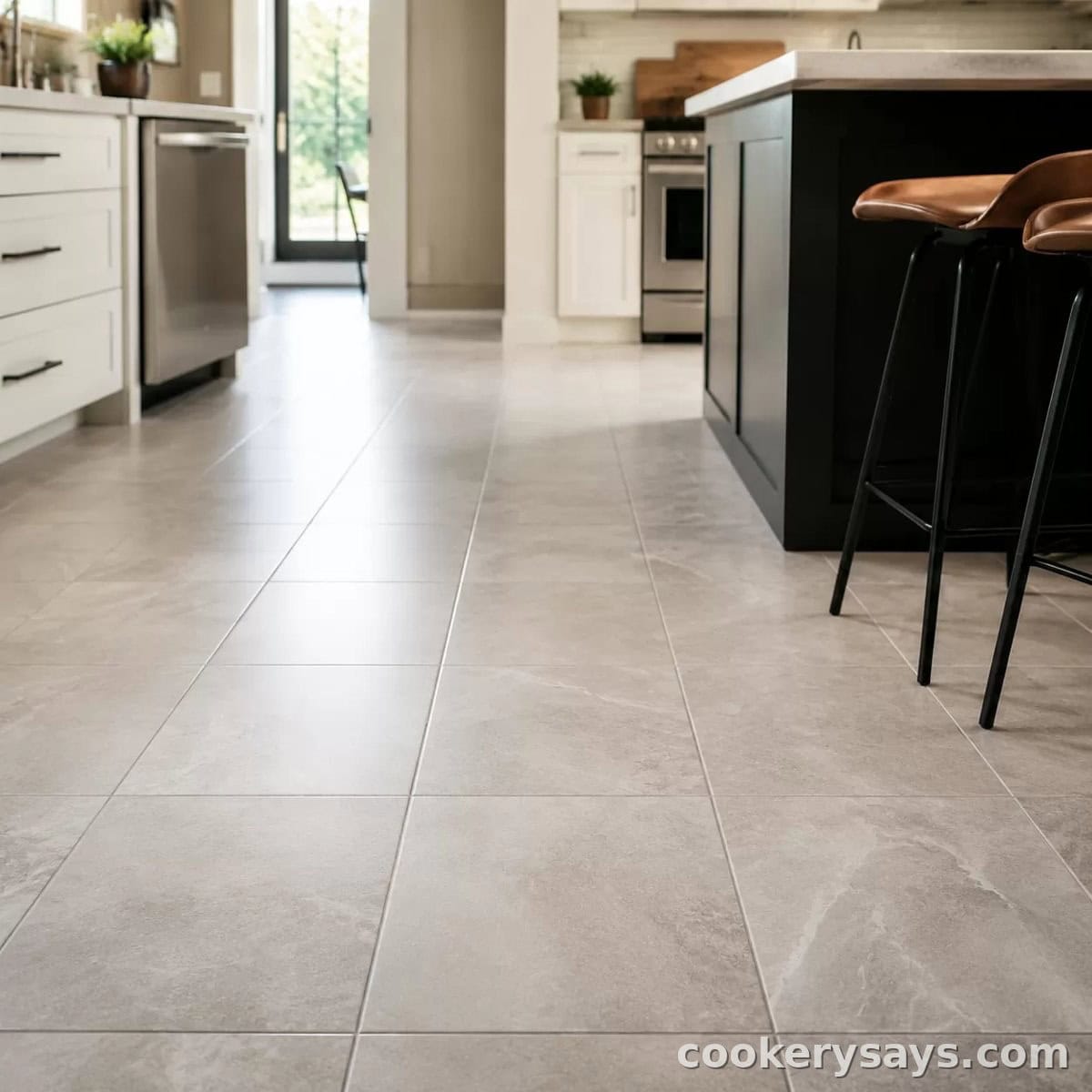
There is no single best kitchen flooring — there is a best one for your household, decided by four things: water, wear, comfort and budget. Water comes first, because kitchens spill daily and leak occasionally. Wear is next: look for a 20-mil wear layer on vinyl plank, or a PEI 4–5 rating on tile. Comfort matters more than people expect — you stand on this floor for hours — and budget should always be compared as an installed cost per square foot, not the box price. Sequencing matters too: floors usually go in after cabinets but before appliances are connected, and our kitchen remodel ideas 2026 guide shows where flooring sits in the full order of work.
10 Kitchen Flooring Ideas That Last
1. Luxury Vinyl Plank (LVP): The Waterproof All-Rounder
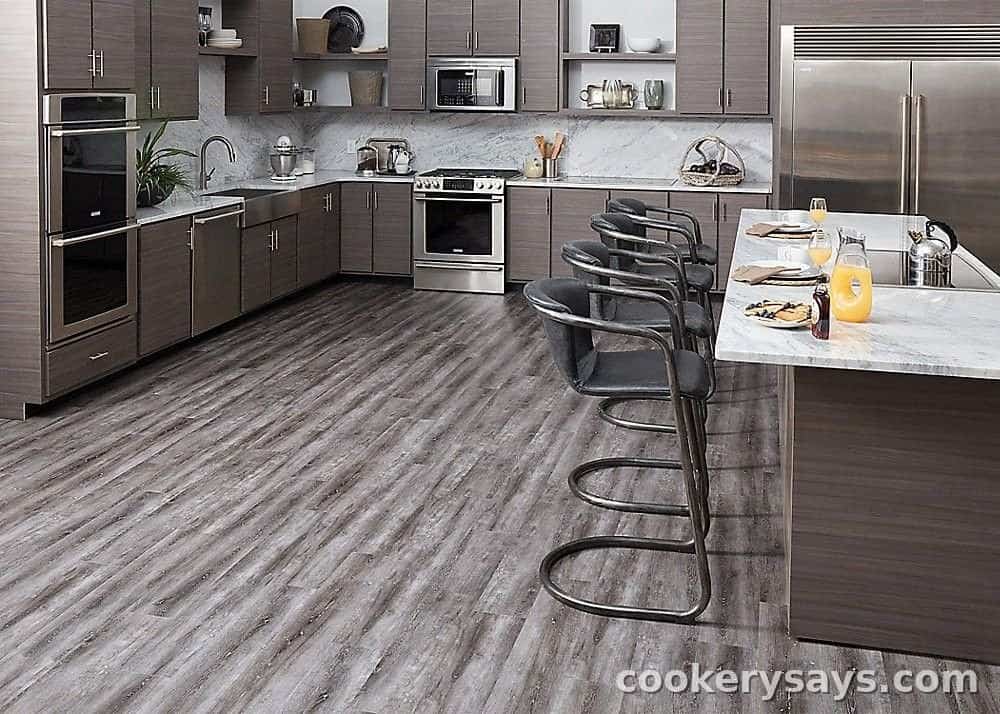
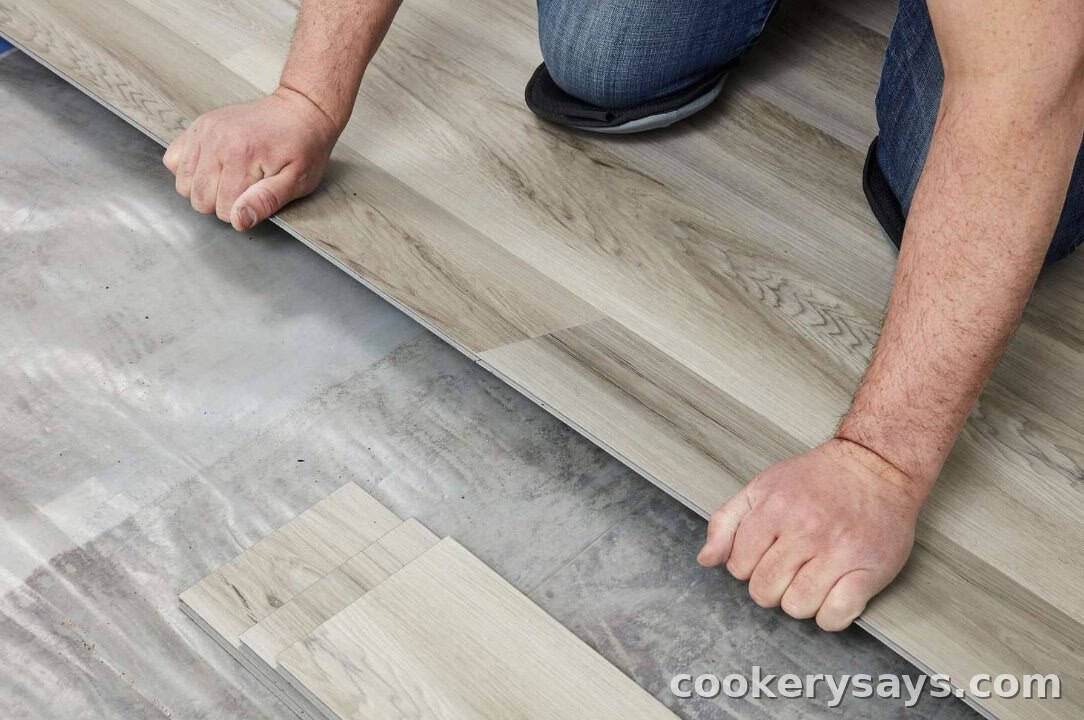
Luxury vinyl plank is the most popular of all kitchen flooring ideas right now, and the numbers explain why. Modern rigid-core LVP (look for SPC — stone plastic composite — cores) is 100% waterproof, warm and quiet underfoot, and realistic enough that guests bend down to check whether it is real oak. It clicks together without glue — the friendliest DIY floor on this list — and at roughly $3–$7 per square foot installed it undercuts almost everything else. Choose a wear layer of 20 mil or thicker for kitchens with kids and dogs. Its one weakness is heat: a scorching pan set straight down can mark it.
2. Porcelain Tile: The Most Durable Kitchen Flooring
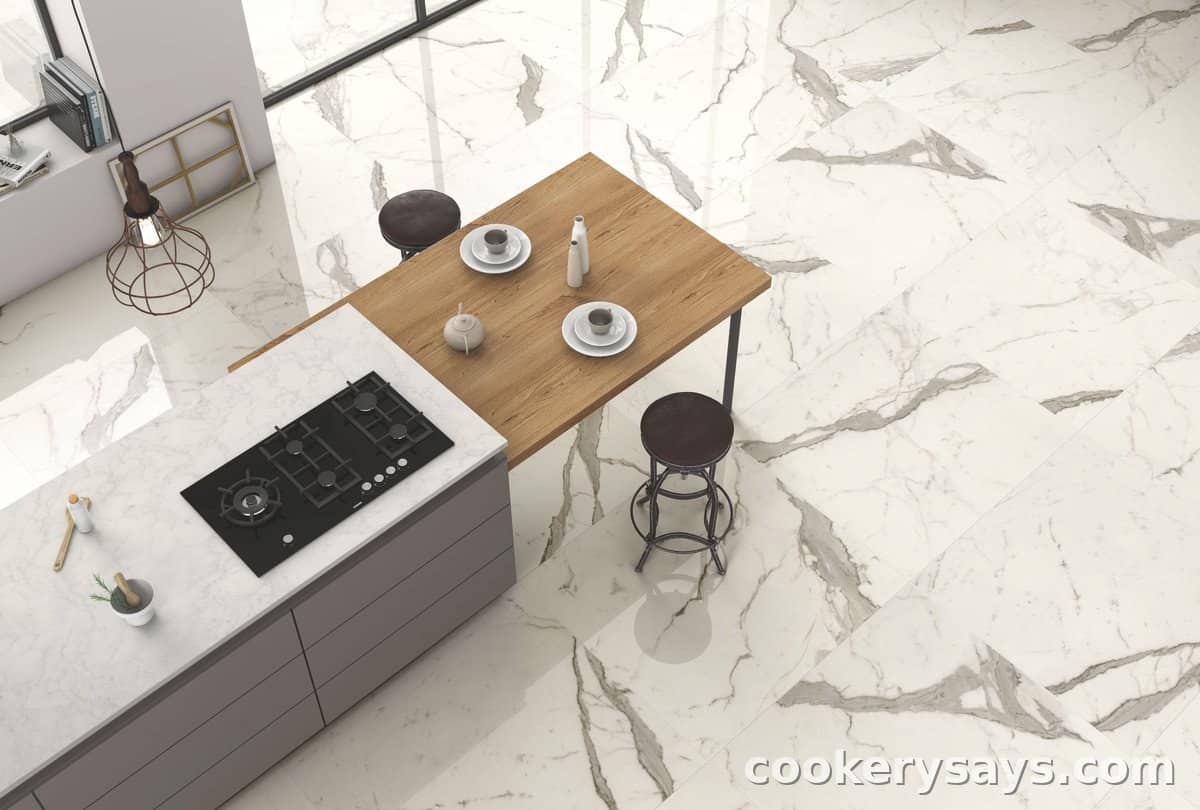
If you want a floor your grandchildren could inherit, porcelain is it. Fired denser than ceramic, it absorbs less than 0.5% water, resists scratches, stains and heat, and routinely lasts 25–50 years — why it tops most rankings of the most durable kitchen flooring. Large-format and marble-look porcelain are the defining kitchen floor tile ideas of 2026: fewer grout lines, a calmer, more expensive feel, at about $8–$15 per square foot installed. The trade-offs are a hard, cool surface (a washable runner fixes tired feet) and grout that needs sealing. Planning a tile floor in detail? Start with our guide to choosing the perfect kitchen tile for your home.
3. Ceramic & Patterned Tile: Personality on a Budget
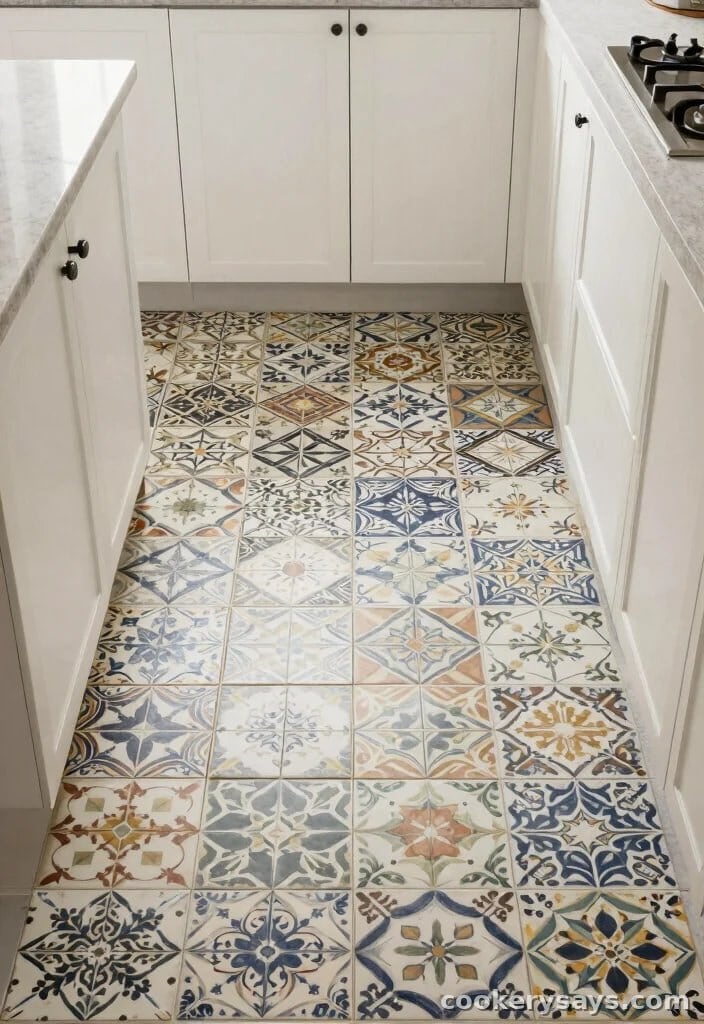
Ceramic tile is porcelain’s lighter, cheaper cousin — softer and slightly more porous, but with the widest design range of any floor here, at roughly $6–$12 per square foot installed. It is the material behind the patterned floors all over Pinterest right now: encaustic-look prints, Mediterranean patchwork, terrazzo-look speckles that hide every crumb. A busy pattern is the most forgiving floor a busy kitchen can have; pair it with quiet cabinets so the room does not shout. For more pattern inspiration, see our best kitchen tile design ideas.
4. Engineered Hardwood: Real Wood That Tolerates a Kitchen
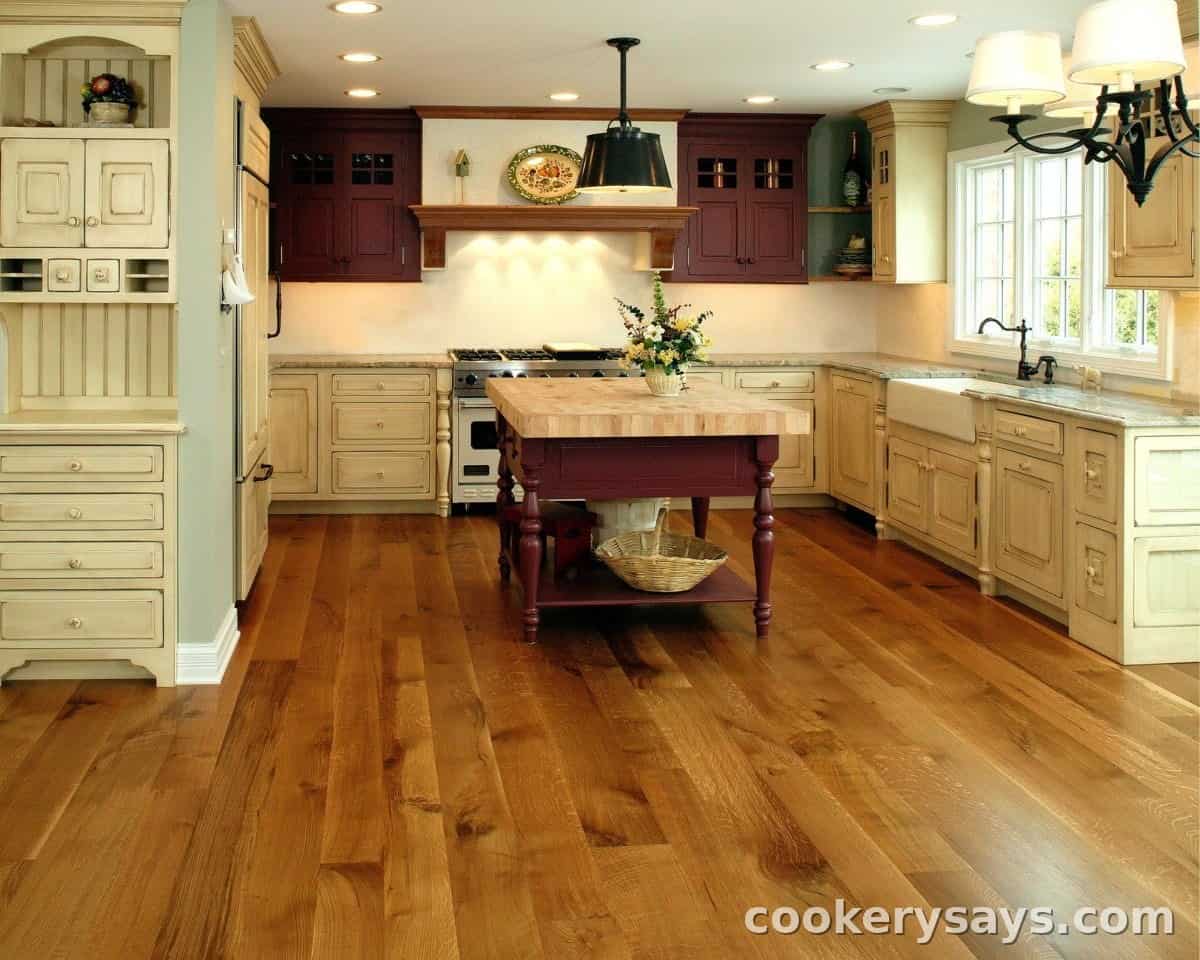
Nothing matches the warmth of real wood underfoot, and engineered hardwood is how you get it safely into a kitchen. A genuine oak or walnut veneer on a stable plywood core resists the humidity swings that warp solid planks, and wide-plank, natural-matte finishes are a headline kitchen flooring trend for 2026 — especially where the floor runs straight into the living room. Expect $7–$12 per square foot installed and a 20–30 year life. It is water-resistant, not waterproof: wipe spills promptly and put a mat at the sink. Designing the whole room around warm wood? Our kitchen design: a complete guide to creating your dream space shows how flooring ties the layout together.
5. Waterproof Laminate: The Wood Look for Less
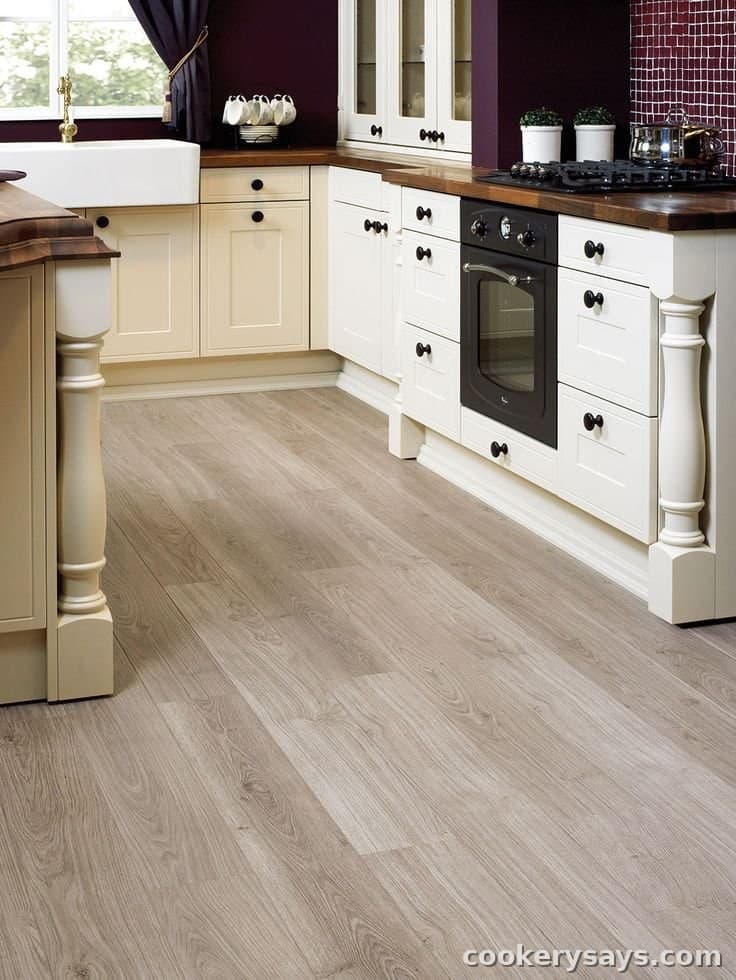
Laminate has quietly grown up. Today’s waterproof laminate pairs a photographic wood layer with a sealed core rated for kitchen spills, delivering a convincing plank floor for about $3–$5 per square foot installed — the cheapest convincing wood look you can buy. It feels warmer than tile, installs as a floating click floor, and shrugs off pet claws better than real wood. Read the fine print: “waterproof” ratings vary from 24 to 72 hours of standing-water protection, and a worn plank cannot be refinished — only replaced.
6. Natural Stone: Slate, Marble and Travertine
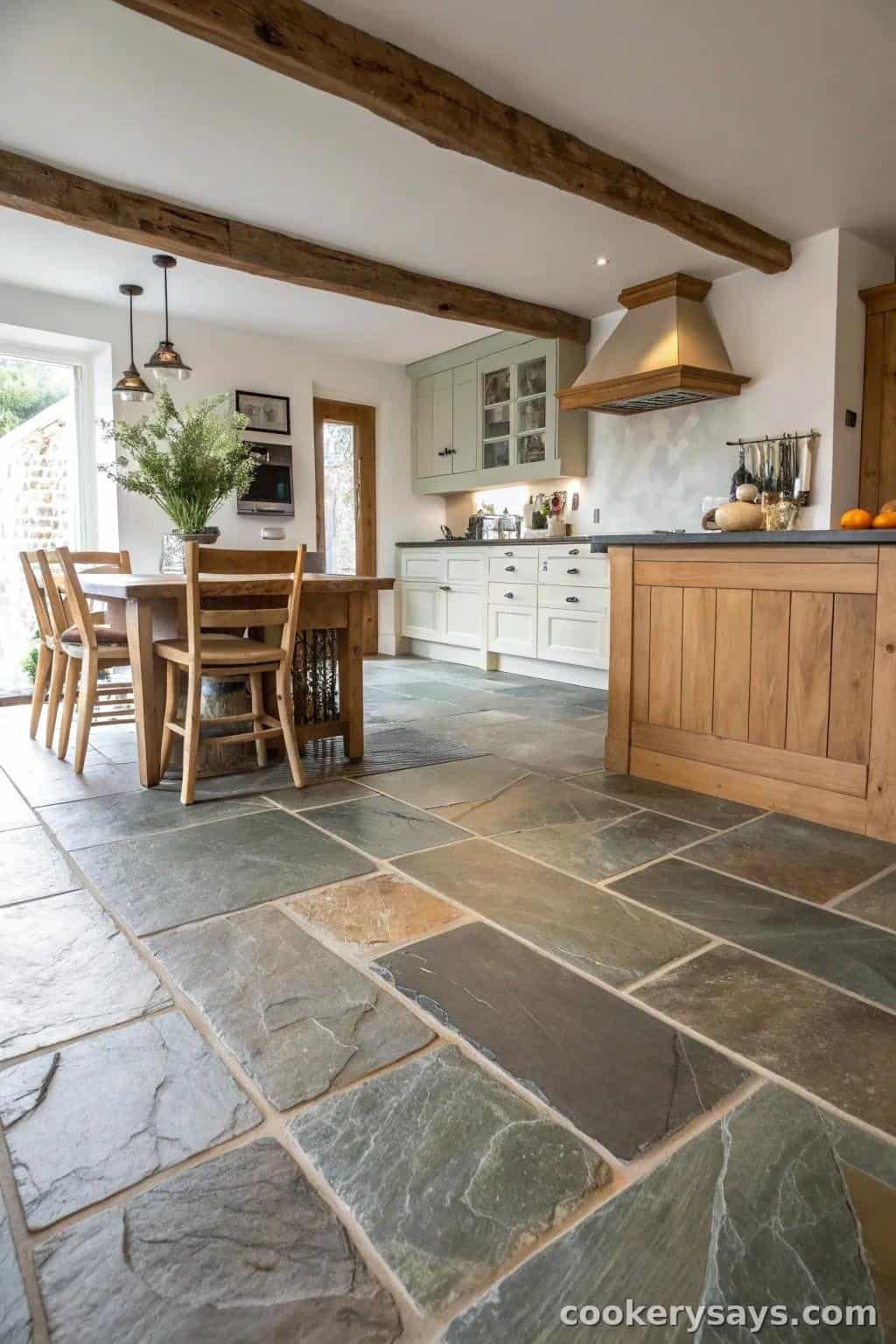
Natural stone is the luxury end of kitchen flooring ideas: slate with its natural grip, honed marble, travertine and limestone in the soft, earthy tones designers love this year. No two tiles are alike, and the floor can last 50 years or more. The honest costs: $15–$30 per square foot installed, a hard, cold feel underfoot, and maintenance — stone is porous, needs resealing every 1–2 years, and marble etches if lemon or vinegar sits on it. Choose slate or granite for a family kitchen; save marble for lower-traffic ones.
7. Polished Concrete: The Modern, Indestructible Slab
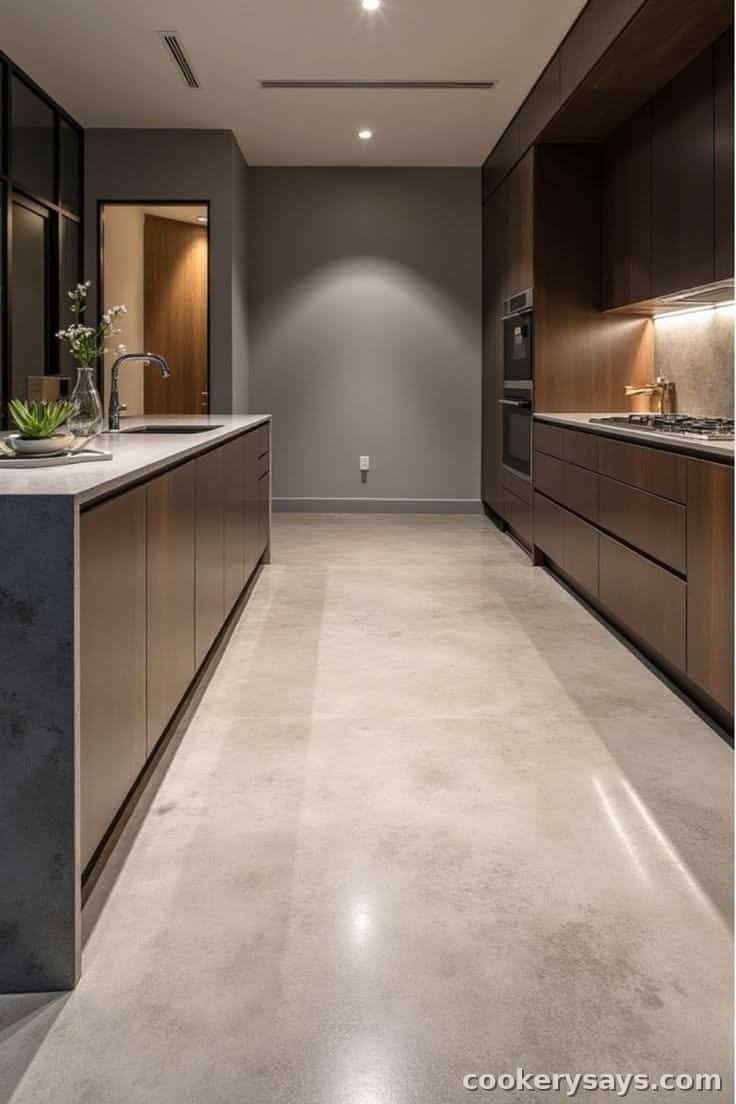
In a slab-on-grade home, the structural floor can become the finished floor: ground, polished and sealed concrete is seamless, waterproof once sealed, and lasts the life of the house for about $6–$12 per square foot. It suits modern and industrial kitchens and pairs beautifully with radiant heating. It is also the hardest, coldest surface on this list, it can crack as the slab settles, and dropped crockery rarely survives. Rugs at the sink and stove are not decoration here — they are equipment.
8. Cork & Bamboo: The Comfortable, Eco-Friendly Pair
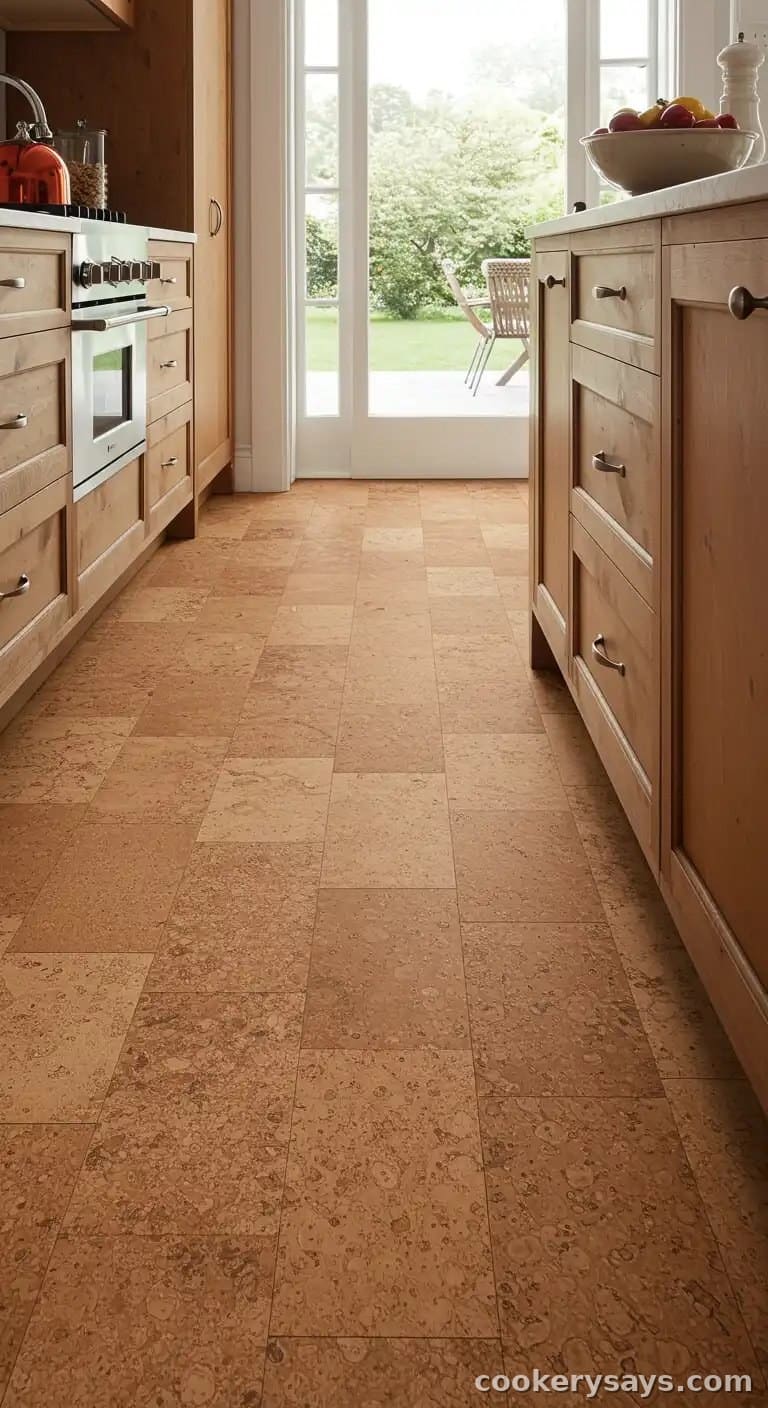
Cork is the comfort champion of kitchen flooring: naturally cushioned, warm, quiet and gentle on joints — and on dropped plates, which often bounce instead of smashing. Sealed cork handles everyday spills well, though it must be resealed every few years and can dent under heavy fridge feet. Strand-woven bamboo is its harder eco cousin — tougher than many hardwoods, fast-growing — but only moderately water-resistant. Cork runs about $5–$10 per square foot installed, bamboo $5–$9. Pick cork if you cook for hours; bamboo if you want an eco floor that reads like wood.
9. Sheet Vinyl: The Seamless Budget Classic
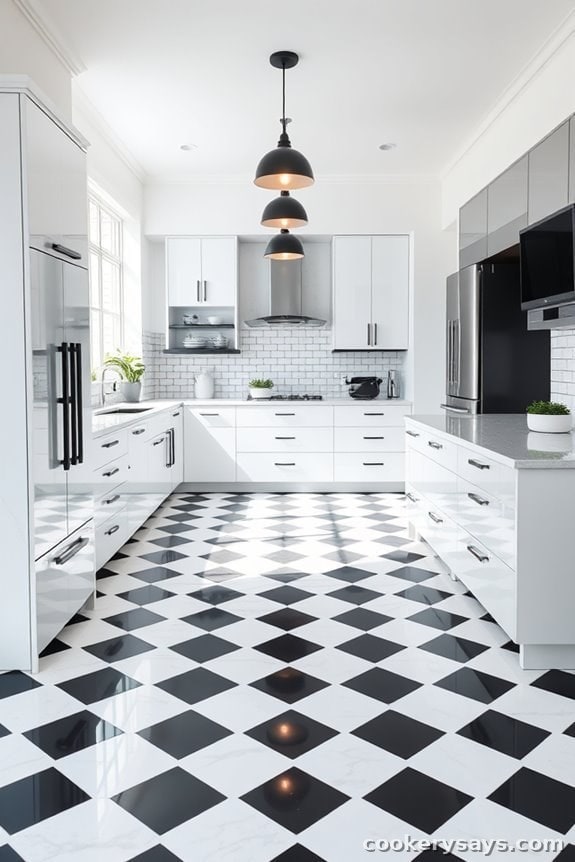
Sheet vinyl is the unsung hero of budget kitchen flooring ideas: one seamless piece — no grout, no plank seams for water to find — cushioned underfoot and just $2–$5 per square foot installed. Modern prints are so good that the classic checkerboard, this year’s revival pattern, is most often sheet vinyl pretending to be marble tile. It is the smart pick for rentals and tight budgets. The compromises: a shorter 10–15 year life, and a whole-sheet replacement if it is ever badly damaged.
10. Herringbone & Checkerboard: Patterns That Transform Any Material
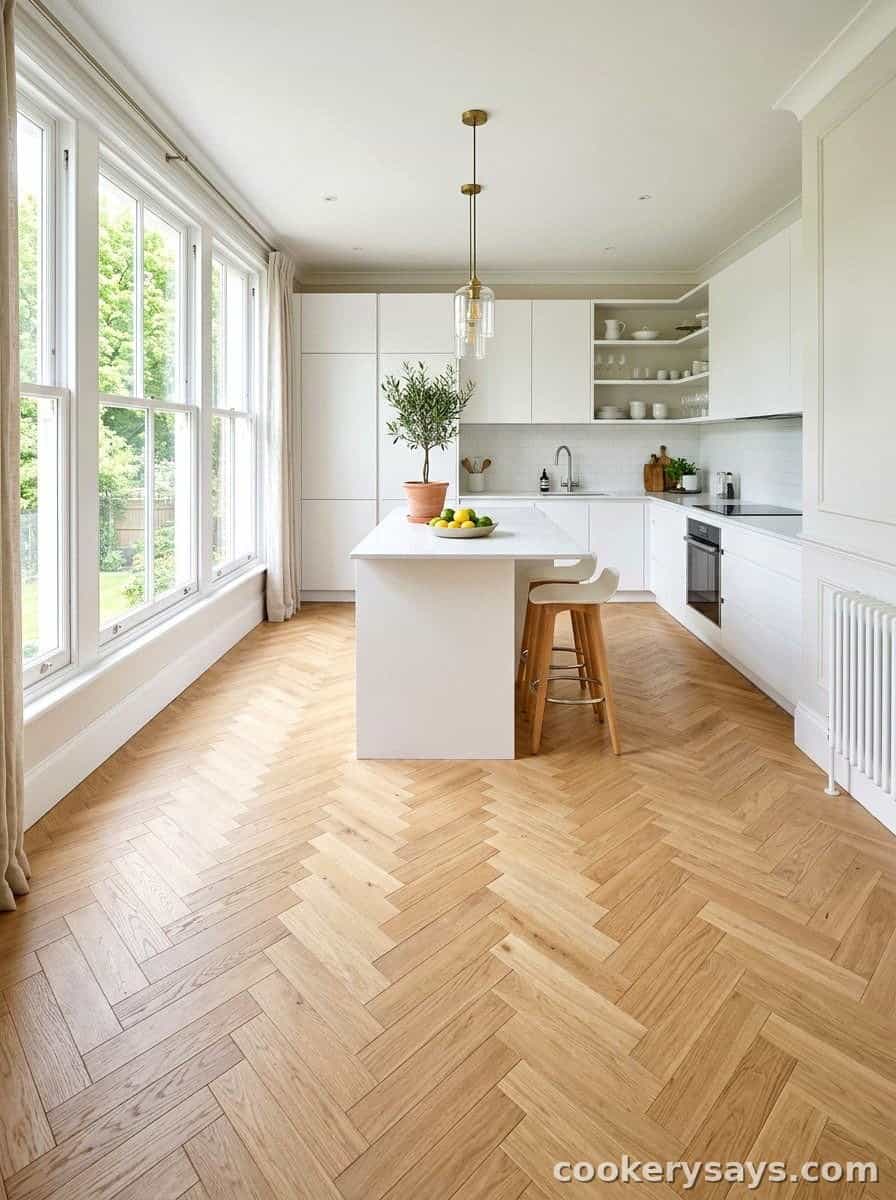
Sometimes the idea is not the material but the layout. Herringbone — narrow planks or tiles zig-zagged across the floor — adds movement, makes narrow kitchens feel wider, and turns plain wood-look porcelain or LVP into something that looks custom; budget 10–15% extra material and higher labour for the angled cuts. Checkerboard is the other 2026 revival, softened for today: burgundy and cream, or forest green and white, instead of stark black and white. Let the pattern lead the room — our kitchen color ideas that will instantly transform your space will help you build the cabinet and wall colours around it.
Kitchen Flooring Compared: Water, Cost and Durability
| Flooring | Water Resistance | Installed Cost / sq ft | Lifespan | Best For |
|---|---|---|---|---|
| Luxury vinyl plank (LVP) | Waterproof | $3–$7 | 15–25 years | Families, pets, most kitchens |
| Porcelain tile | Waterproof (seal grout) | $8–$15 | 25–50 years | Maximum durability |
| Ceramic tile | Good | $6–$12 | 15–25 years | Pattern and colour on a budget |
| Engineered hardwood | Water-resistant | $7–$12 | 20–30 years | Real-wood warmth, open-plan homes |
| Waterproof laminate | Water-resistant | $3–$5 | 10–20 years | Wood look, tight budgets |
| Natural stone | Good when sealed | $15–$30 | 50+ years | Luxury kitchens |
| Polished concrete | Waterproof when sealed | $6–$12 | 50+ years | Modern, industrial styles |
| Cork | Moderate (reseal) | $5–$10 | 15–25 years | Comfort for long cooking sessions |
| Sheet vinyl | Waterproof, seamless | $2–$5 | 10–15 years | Rentals and lowest budgets |
Costs are 2026 planning estimates including materials and professional installation; removing an old floor and repairing the subfloor adds roughly $2–$7 per square foot where needed.
How to Choose a Kitchen Floor: Practical Tips
- Start with water, not looks. Shortlist only floors that survive your household’s real spill habits; in a leak-prone kitchen that means waterproof LVP, porcelain or sheet vinyl.
- Compare installed cost per square foot. Tile and stone labour often equals the material cost. For a typical 200 sq ft kitchen, budget roughly $600–$1,400 for LVP, $1,600–$3,000 for porcelain, and $3,000+ for natural stone.
- Check the ratings that matter. Vinyl plank: 20-mil wear layer minimum. Tile: PEI 4–5 and a matte or textured finish for grip when wet.
- Test comfort honestly. Stand barefoot on samples for a few minutes. Hard floors (tile, stone, concrete) reward a washable runner at the sink and stove.
- Match the pattern to the room. Large-format tiles and long planks calm small kitchens and make them feel bigger; busy patterns belong in larger rooms or under plain cabinets.
- Budget the hidden extras. Old-floor removal, subfloor levelling and extra material for patterned layouts (10–15% for herringbone) are where flooring budgets usually break.
Frequently Asked Questions
What is the most durable kitchen flooring? Porcelain tile, natural stone and polished concrete, each capable of lasting 25–50 years or more. Porcelain is the practical winner for most homes: waterproof, scratch-resistant, and only the grout ever needs resealing.
What is the best waterproof flooring for a kitchen? Rigid-core luxury vinyl plank (LVP) and porcelain tile are the two genuinely waterproof kitchen floors. LVP wins on comfort, warmth and price ($3–$7 per square foot installed); porcelain wins on lifespan and heat resistance. Sheet vinyl is a third waterproof option and the cheapest, thanks to its seamless surface.
How much does kitchen flooring cost per square foot? Installed in 2026, expect roughly: sheet vinyl $2–$5, laminate $3–$5, LVP $3–$7, concrete $6–$12, ceramic $6–12, engineered hardwood $7–$12, porcelain $8–$15 and natural stone $15–$30 per square foot. Add removal and subfloor repair where your project needs them.
Is hardwood flooring a good idea in a kitchen? Engineered hardwood, yes — with care. Its stable core handles kitchen humidity far better than solid wood, and it is the warmest, most comfortable hard floor here. Wipe spills promptly, use mats at the sink and dishwasher, and choose a factory finish rated for kitchens. In a leak-prone or very busy family kitchen, wood-look LVP or porcelain gives the same look without the worry.
Which kitchen flooring is best for dogs and high traffic? Porcelain tile is nearly indestructible under claws and muddy paws, and its surface never scratches. LVP with a 20-mil wear layer is the close second — softer, quieter and warmer for animals to lie on, and individual planks can be replaced if one is ever damaged.
Conclusion
The right kitchen floor matches your top priority: porcelain for a floor that outlasts the kitchen itself, LVP for waterproof comfort at a friendly price, engineered wood for warmth, patterned tile or checkerboard for personality, sheet vinyl or laminate when the budget leads. Decide on water first, check the ratings, compare the true installed cost — and these kitchen flooring ideas will still look good after a decade of breakfasts, spills and celebrations.