Kitchen Sink & Faucet Ideas: 11 Styles, Finishes and Smart Upgrades for 2026
Introduction
You use the sink more than any other spot in the kitchen, yet it is often the last thing chosen in a remodel. The right kitchen sink and faucet ideas change that: the sink becomes a prep station, a style statement and the hardest-working corner of the room, all at once.
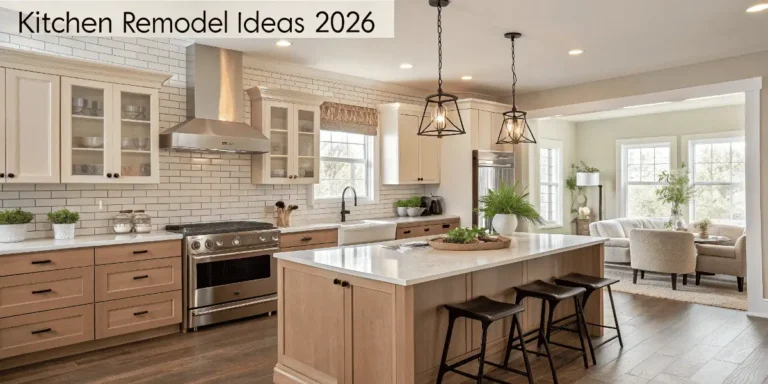
For 2026 the direction is clear: bigger single bowls, workstation sinks with built-in ledges, dark composite finishes, and hands-free faucets in warm metals like brushed gold and champagne bronze. Below are 11 kitchen sink and faucet ideas — sinks first, then the faucets and finishes to pair with them — with real sizes, materials and costs. Planning the bigger project around them? Our kitchen remodel ideas 2026 guide sequences the whole renovation.
What Is a Kitchen Sink Setup? Mounts, Bowls and Materials Explained
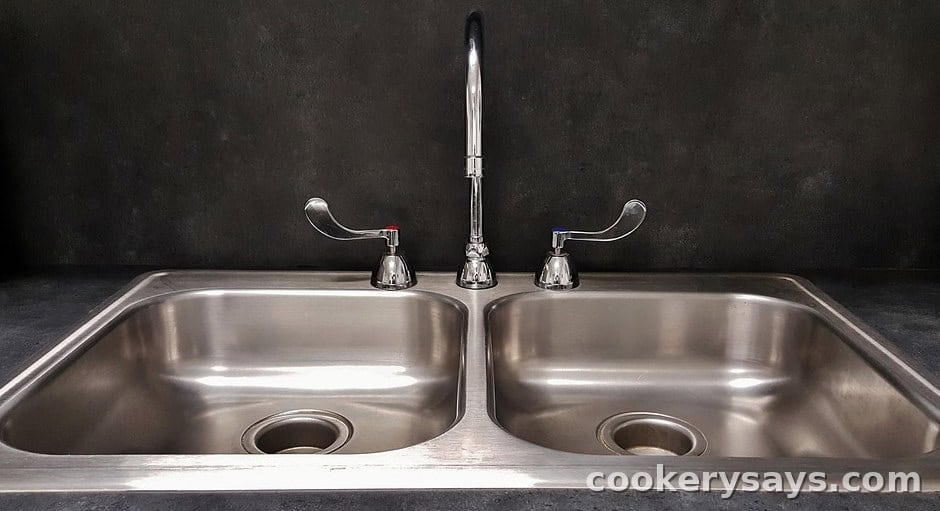
A kitchen sink setup hides three decisions: how the sink mounts, how the bowl is shaped, and what both pieces are made of.
Mount type. An undermount sink fixes beneath the countertop, so crumbs wipe straight in — but it needs a solid countertop like granite or quartz. A drop-in (top-mount) sink rests its rim on top: cheaper, DIY-friendly, and the only sensible choice for laminate. A farmhouse sink has an exposed apron front.
Bowl layout. One deep single bowl swallows roasting pans whole; a double bowl splits washing and rinsing into two zones. The old even 50/50 split is fading — the single deep bowl and the uneven 60/40 double lead in 2026.
Materials. Stainless steel is the practical all-rounder (choose 16-gauge — thicker and quieter than 18-gauge). Fireclay gives the classic farmhouse look. Granite composite is dense, quiet and scratch-resistant, from white to matte black. Most kitchens pair the sink with a high-arc pull-down faucet, and the finish — matte black, brushed gold, brushed nickel — ties the sink zone to the room.
11 Kitchen Sink & Faucet Ideas for 2026
1. Farmhouse Apron-Front Sink: The Character Piece
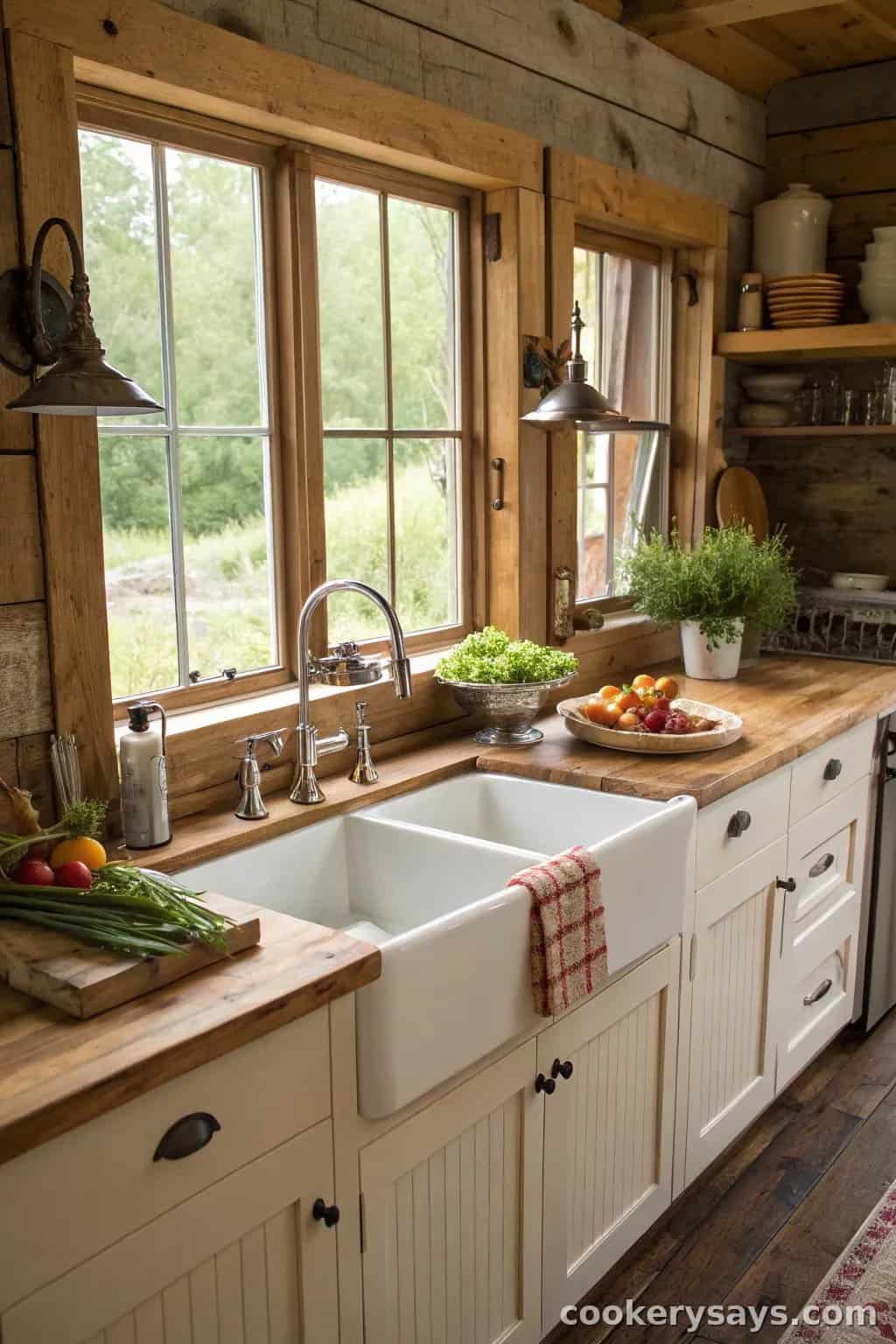
The farmhouse sink never really leaves. Its exposed apron front and deep single bowl (usually 9–10 inches) swallow stockpots and roasting tins whole, and in glossy white fireclay it anchors a Shaker or country kitchen instantly. Fireclay is tough but heavy — the base cabinet usually needs reinforcing, and most farmhouse installs land between $800 and $2,000 with cabinet work included. Planning new cabinets around one? Our guide to kitchen cabinets ideas covers the sink-base sizes to order. Pair it with a bridge faucet (idea 10) for the full traditional picture.
2. Undermount Sink: The Seamless Modern Default
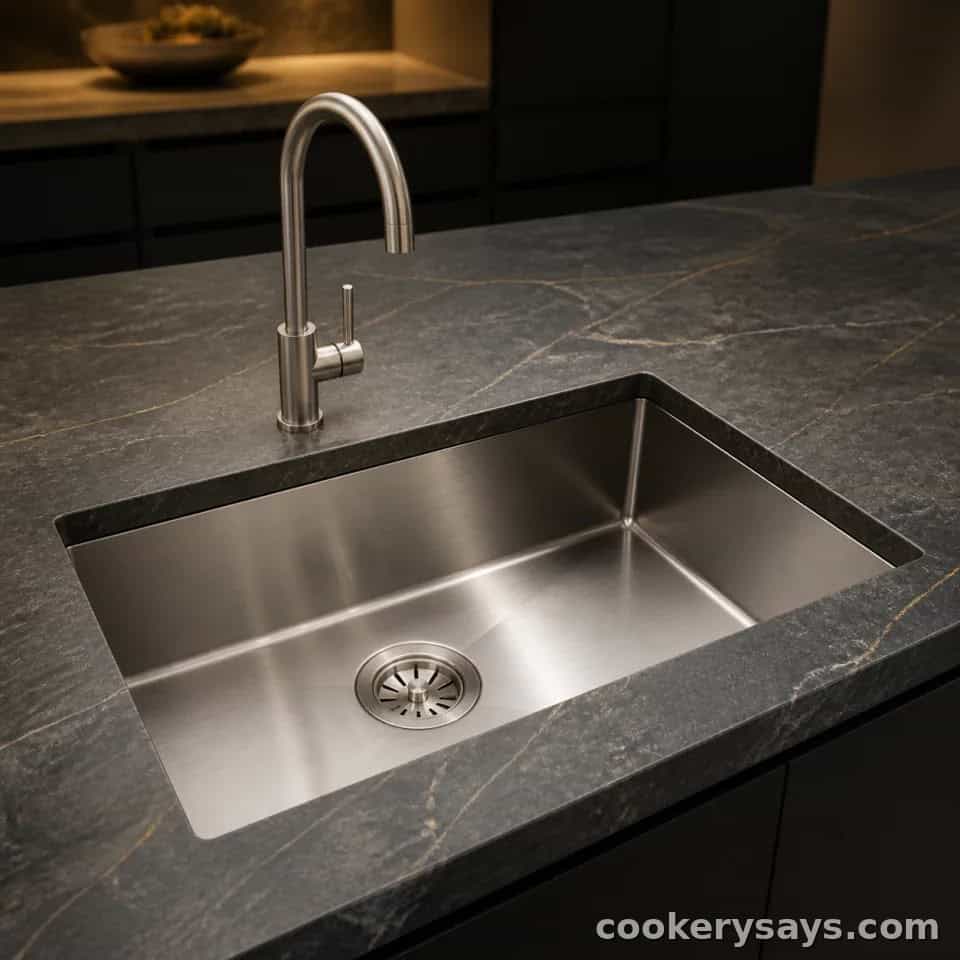
With stone or quartz counters, the undermount is the default for a reason: no rim on top, so the countertop flows straight into the bowl and every crumb sweeps in with one wipe. The trade-offs: it costs more to install than a drop-in, it only works with solid countertop materials, and the silicone seal where sink meets stone should be renewed every few years. Stainless undermounts run about $200–$500.
3. Workstation Sink: A Prep Station in the Bowl
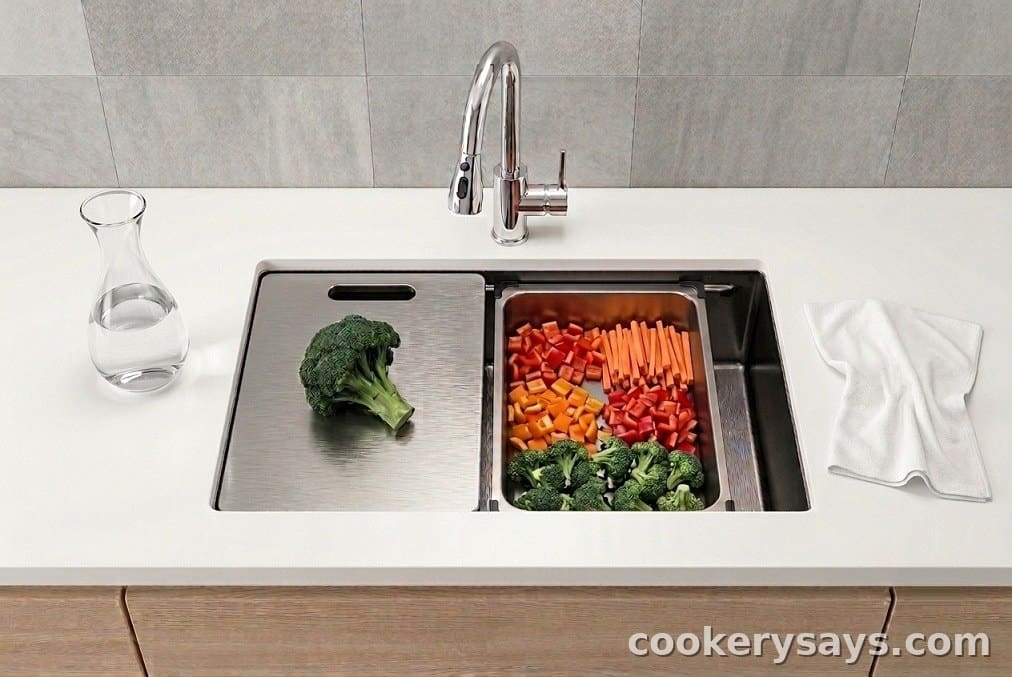
The fastest-growing sink style of 2026, the workstation sink has a built-in ledge inside the rim where cutting boards, colanders and drying racks slide back and forth. You chop over the bowl, sweep scraps straight in, rinse in the colander beside the board — the sink becomes a full prep station and returns counter space in small kitchens. Most are 30–36 inch stainless single bowls, roughly $350–$900 with accessories. It is also the smartest sink for an island — see our kitchen island ideas.
4. Deep Single Bowl: One Big Basin That Fits Everything
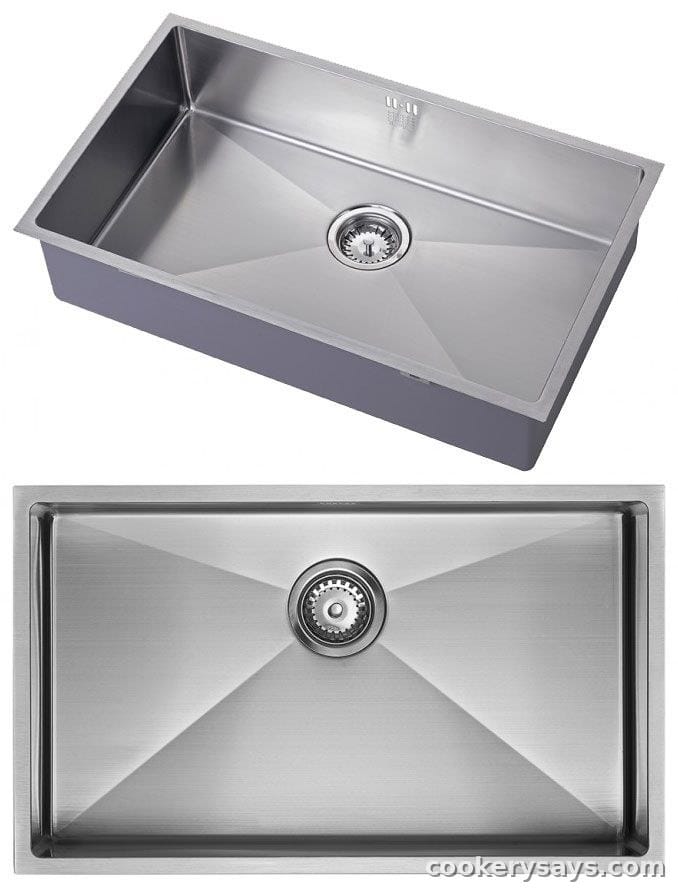
The single deep bowl is the layout trend of the moment: one uninterrupted basin, 9–10 inches deep, that takes a full baking sheet, a wok or a roasting pan lying flat — things a divided sink simply cannot. Add a bottom grid to protect the finish and a pull-down faucet to reach every corner. Choose 30–33 inches wide for most kitchens; go 36 inches only if your cabinet allows it. From around $150 for stainless, it is one of the best-value upgrades on this list.
5. Double Bowl, Done the 2026 Way: The 60/40 Split
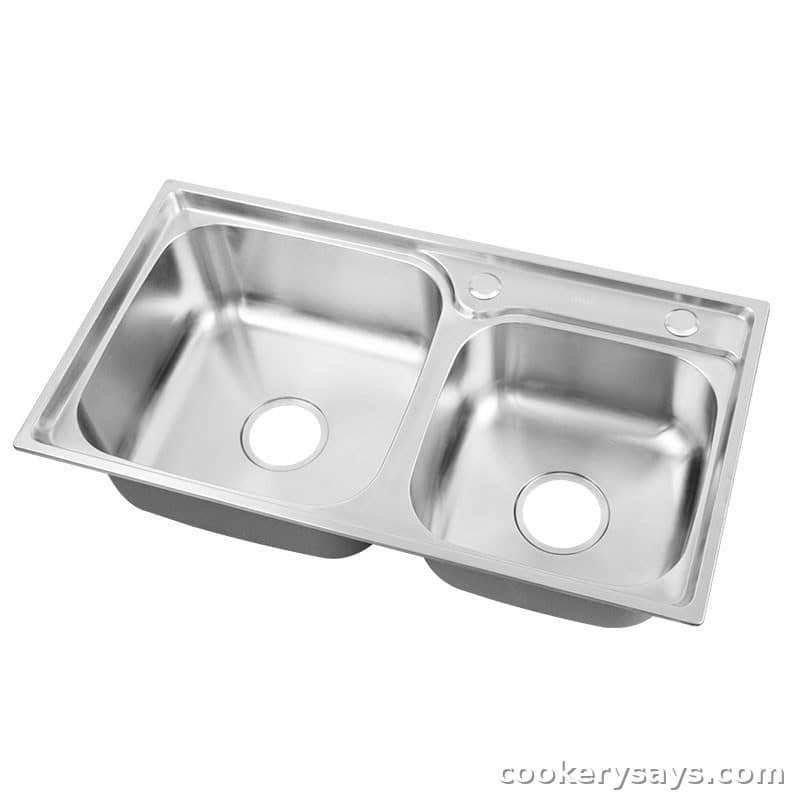
Double bowls still suit households that wash and rinse simultaneously, but the even 50/50 split is on its way out, because neither side fits a big pan. The modern answer is a 60/40 (or 70/30) split: one genuinely large bowl for pans and prep, one smaller bowl for rinsing glasses and produce. If two people cook and clean together nightly, this remains the most practical layout; occasional big-pan cooks are happier with idea 4.
6. Integrated Sink: Carved From the Countertop Itself
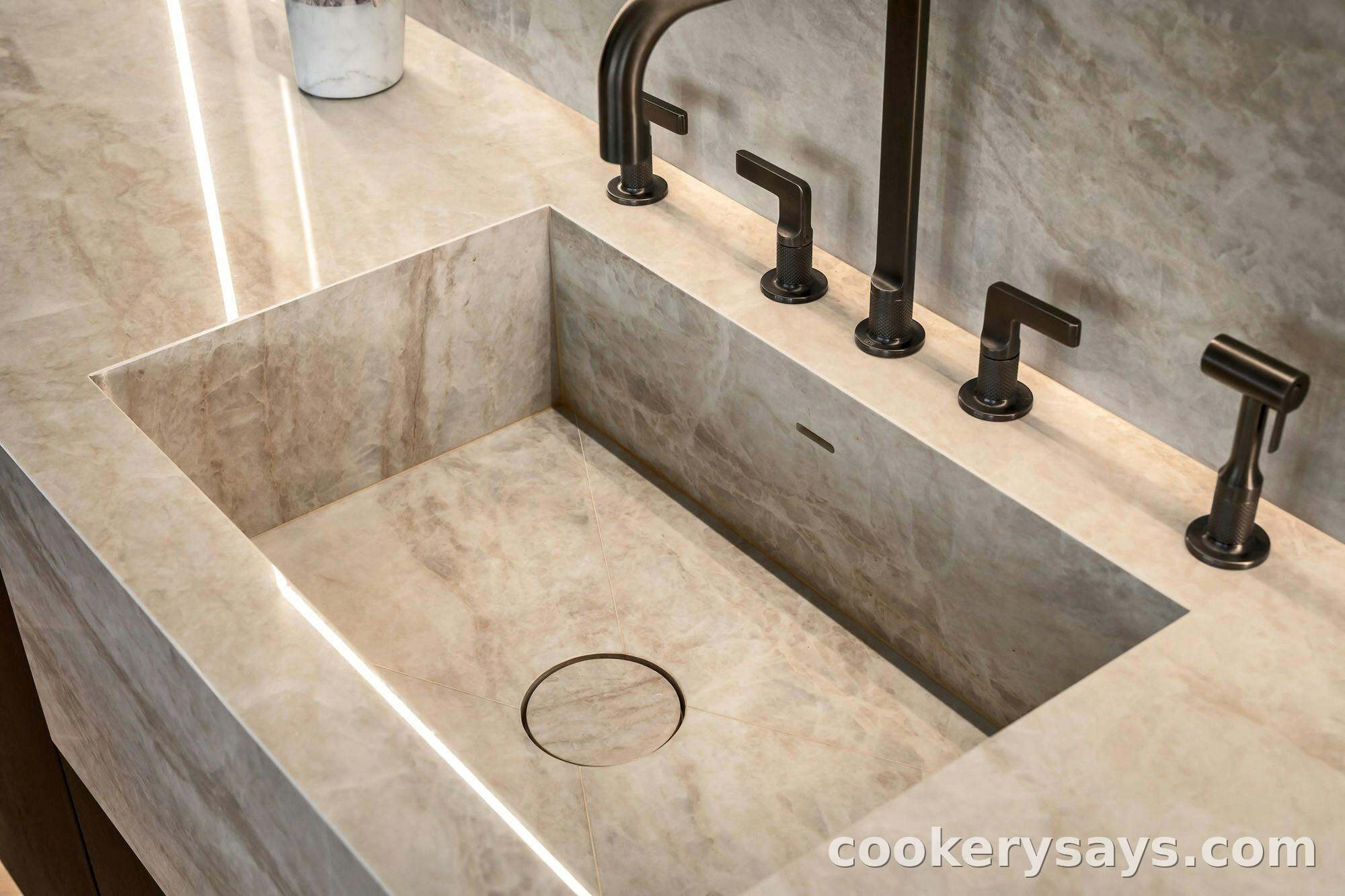
The luxury end of kitchen sink ideas: the basin is fabricated from the same slab as the countertop — quartz, marble or solid surface — so there is no seam, no rim and no join for grime to hide in. Wiping down is a single motion from counter to drain. The commitments are real: it is priced as part of the countertop job, repairs mean stone work rather than a sink swap, and marble etches and stains at the sink faster than anywhere else.
7. Granite Composite and Matte Black Sinks: The Dark Finish Trend
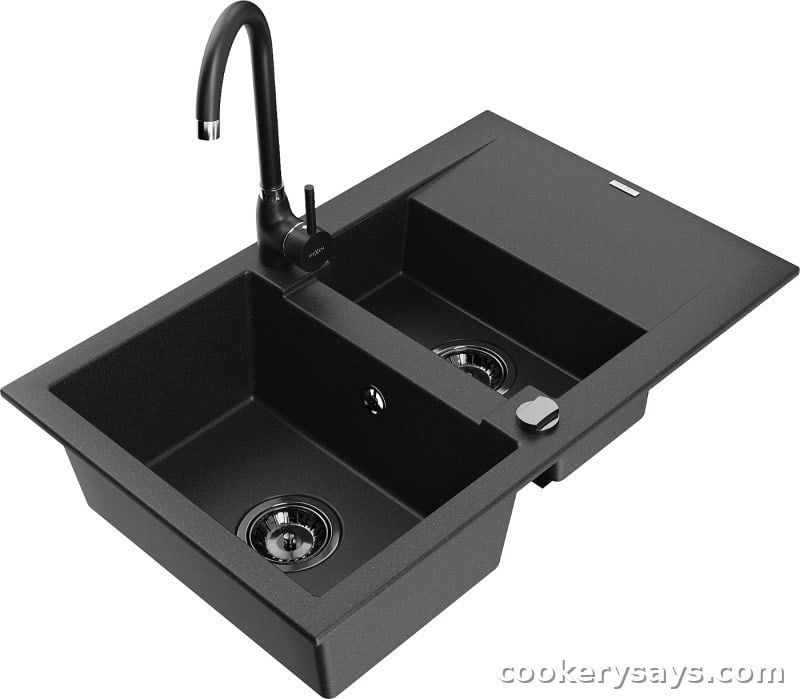
The colour story of kitchen sink trends 2026 is dark: granite composite sinks in matte black, charcoal and deep grey, often paired tone-on-tone with a matte black faucet. Composite — crushed stone bound in resin — resists scratches, heat and stains, runs quieter than stainless, and its matte surface hides water spots far better than polished steel. Prices run about $250–$600. One caution: in hard-water areas, light mineral deposits show on black, so a quick wipe-down habit keeps it looking its best.
8. Pull-Down Faucet: The Hardest-Working Faucet Style
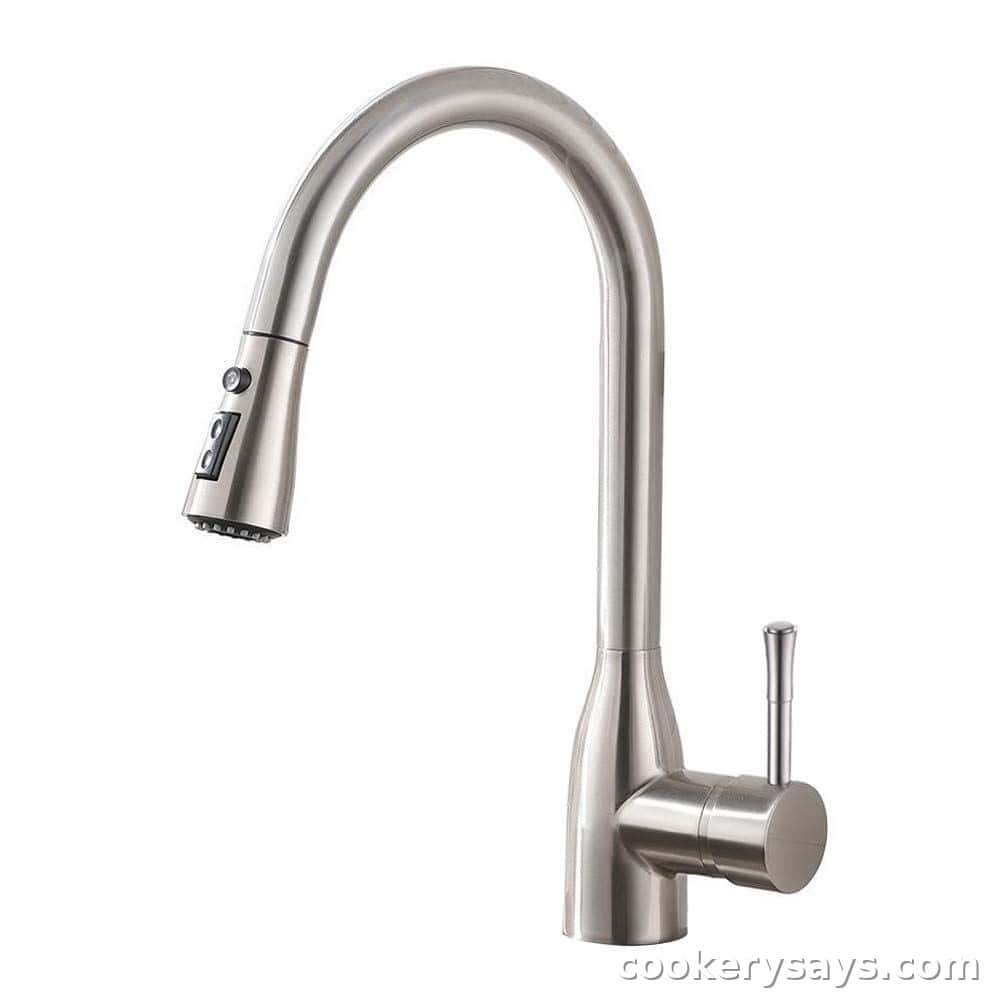
If the sink is the stage, the pull-down faucet is the performer. A high-arc (gooseneck) spout — typically 15–17 inches tall — clears tall pots, and the spray head pulls down into the bowl to rinse corners and blast plates. It is the most-bought faucet style for good reason, and the one to pair with deep single bowls and workstation sinks. Look for a ceramic disc valve (the longest-lasting, drip-free type), a magnetic dock so the head clicks home, and stream plus spray modes. Good models run $150–$300.
9. Touchless and Smart Faucets: Hands-Free Hygiene
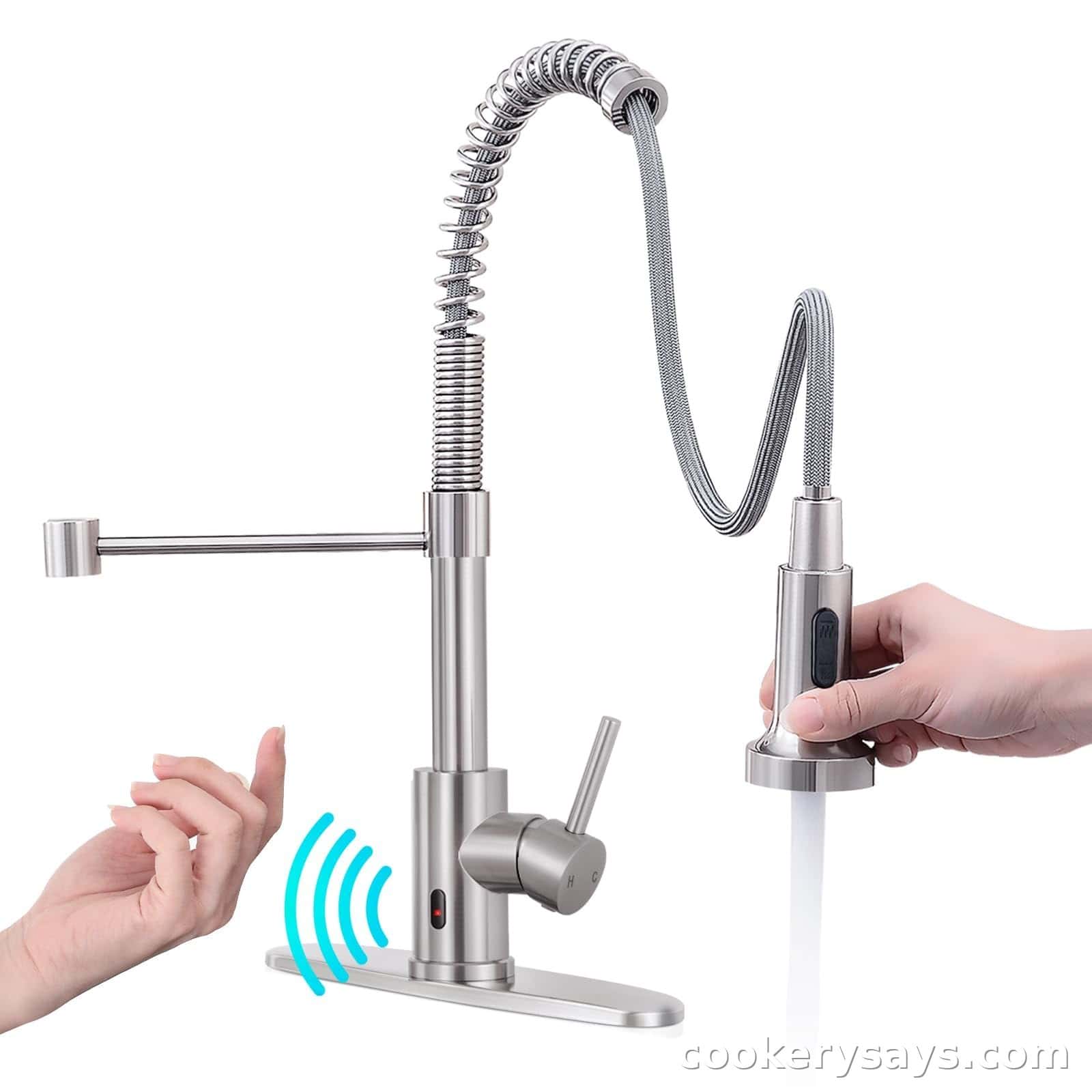
Touchless faucets have moved from novelty to standard option in 2026: a sensor turns the water on when your hands (or a pan) pass under the spout — no touching the handle with messy fingers, no water wasted while you scrub. Touch-activated models, started by tapping the spout, are the halfway option. Expect $300–$600 for a quality model — and check the manual override, so the handle works normally if the sensor ever fails.
10. Bridge Faucet and Pot Filler: The Traditional Power Pair
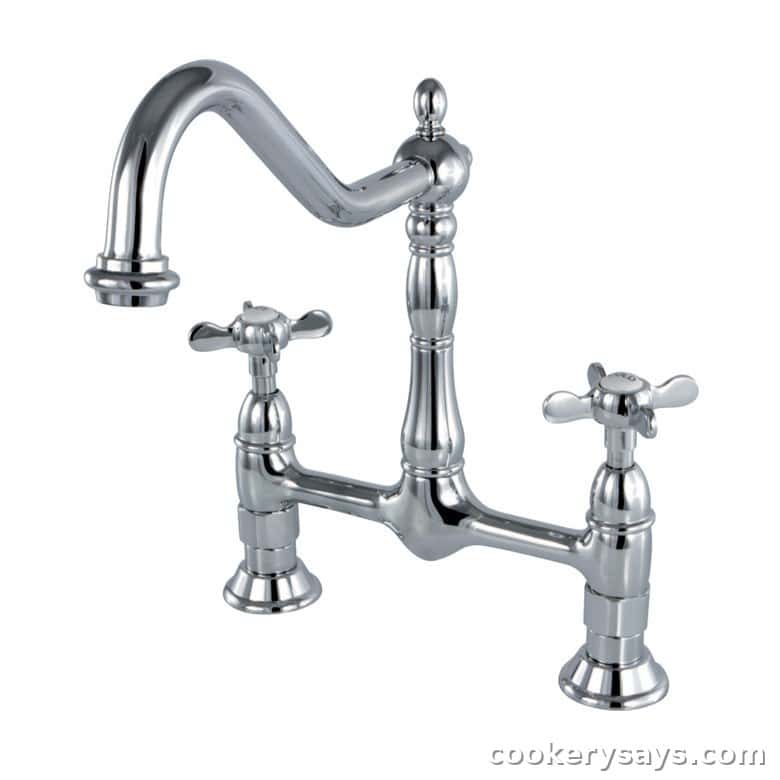
The bridge faucet — two handles joined by an exposed horizontal bar — is the classic partner for a farmhouse sink. Modern versions hide ceramic disc valves inside the vintage shape. Its natural companion is the pot filler: a folding, wall-mounted cold-water tap over the stove that saves carrying full pots across the kitchen, and in brushed gold it doubles as a design feature. One rule for tall faucets: measure the space to any window sill or shelf behind the sink first — and coordinate the height with your kitchen backsplash ideas.
11. Brushed Gold and Champagne Bronze: The Warm-Metal Finish
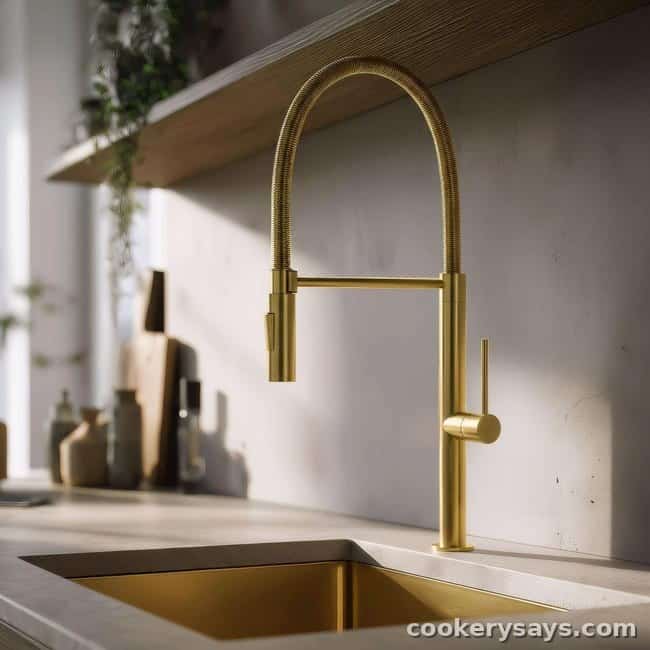
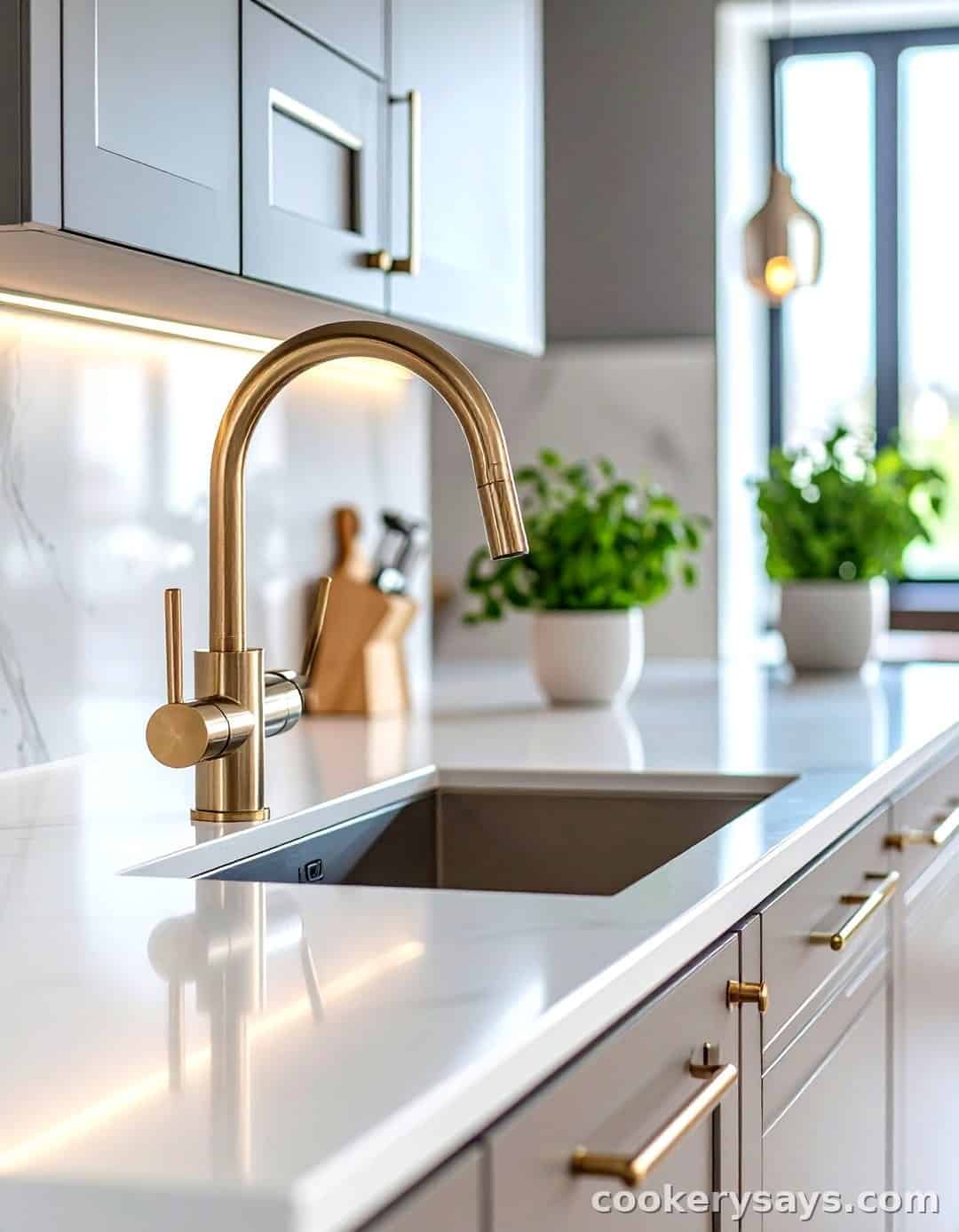
Chrome is no longer the default. The finishes leading 2026 are matte black (the safe statement), brushed nickel (the fingerprint-hiding all-rounder) and the warm metals — brushed gold and champagne bronze — which pair beautifully with white sinks and wood cabinets. Brushed finishes beat polished ones for daily life: they hide water spots instead of advertising them. You do not have to match every metal in the room, but keep the faucet, accessories and soap dispenser in one finish family so the sink zone looks intentional.
Kitchen Sink Types Compared: Cost, Best Use and Notes
| Sink / Faucet Type | Typical Cost | Best For | Good to Know |
|---|---|---|---|
| Drop-in stainless sink | $100–$400 | Budget swaps, laminate counters, DIY | Rim collects grime; easiest to replace |
| Undermount stainless sink | $200–$500 | Stone/quartz counters, modern kitchens | Wipe-in cleaning; renew the seal every few years |
| Farmhouse fireclay sink | $400–$1,200 | Farmhouse and traditional kitchens | Heavy — base cabinet usually needs support |
| Workstation sink | $350–$900 | Small kitchens, keen cooks, islands | Ledge accessories turn the bowl into a prep station |
| Granite composite sink | $250–$600 | Dark finishes, quiet sinks | Matte surface hides water spots; wipe in hard-water areas |
| Integrated sink | Priced with countertop | Seamless luxury kitchens | Repairs mean stone work, not a sink swap |
| Pull-down faucet | $150–$300 | Deep bowls, busy family kitchens | Choose ceramic disc valve + magnetic dock |
| Touchless faucet | $300–$600 | Hygiene, smart kitchens | Check it has a manual override handle |
Costs are for the fixture itself; professional installation typically adds $150–$500, and most complete sink-and-faucet replacements land between $600 and $2,000.
How to Choose a Kitchen Sink and Faucet: Practical Tips
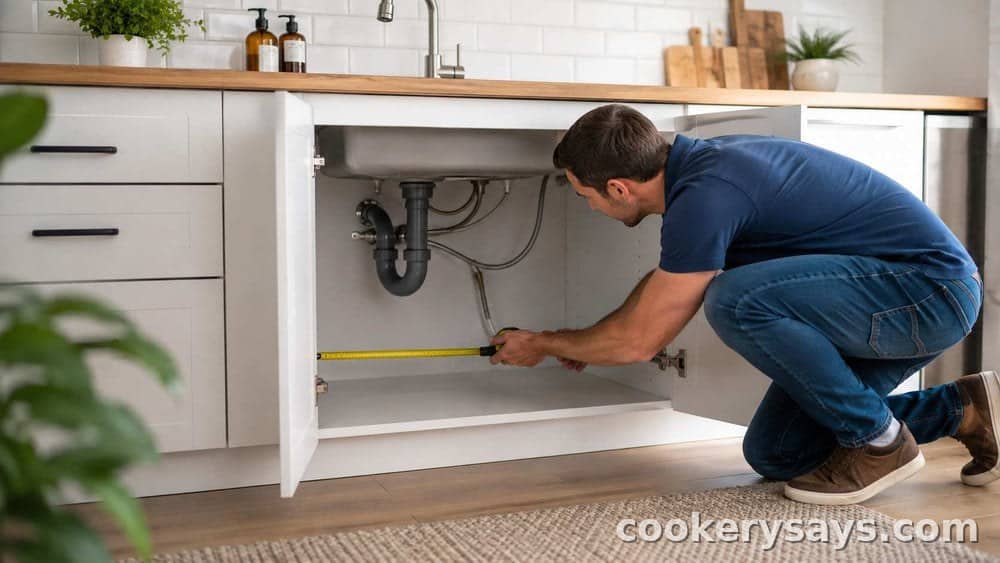
- Measure the cabinet first. The sink must be about 3 inches narrower than the base cabinet — a 33-inch sink needs a 36-inch cabinet. Keeping the countertop? Measure the existing cutout too; the new sink must cover it.
- Pick the size and depth honestly. 30–33 inches wide and 8–10 inches deep suits most homes. Deeper bowls fit bigger pans but mean more bending.
- For stainless, buy 16-gauge. Gauge runs backwards — 16-gauge is thicker than 18-gauge: quieter, harder to dent, worth the small premium.
- Check faucet height and reach. Spout height of 15–17 inches clears stockpots; a reach of 8–9 inches lands the stream near the drain. Measure clearance to windowsills and shelves behind the sink first.
- Count the holes. A pull-down needs one hole (a deck plate can cover extras); bridge faucets need two or three. Match the faucet to the holes in your sink or counter.
- Keep finishes in one family at the sink. Faucet, soap dispenser and disposal button should match; hardware elsewhere can contrast. Brushed finishes hide water spots best.
- Plan under the sink, not just in it. Bowl depth decides what fits below — disposal, filter, caddy. Our kitchen storage and organization ideas make that awkward cabinet work around the pipes.
Frequently Asked Questions
Undermount or drop-in sink — which is better? Choose undermount with a granite, quartz or solid-surface countertop for the cleanest look: crumbs wipe straight into the bowl, with no rim to clean around. Choose drop-in for laminate countertops, a tighter budget or a DIY replacement. The countertop usually makes this decision for you.
How much does it cost to replace a kitchen sink and faucet? Most complete replacements land between $600 and $2,000. The sink runs $150–$750 for most homes (drop-in stainless from $100, fireclay farmhouse $400–$1,200), a faucet adds $100–$300 for a pull-down or $300–$600 for touchless, and professional installation typically costs $150–$500.
Single or double bowl sink — which should I choose? Most cooks are happier in 2026 with one deep single bowl: it fits baking sheets and roasting pans flat, which no divided sink can do. Choose a double bowl only if you regularly wash and rinse at the same time — and pick an uneven 60/40 split, so one side fits a large pan.
What kitchen faucet finish is trending in 2026, and which hides water spots best? Matte black, brushed gold and champagne bronze are the trending finishes, with brushed nickel the timeless safe choice. Brushed finishes hide water spots best — brushed nickel and stainless lead, and polished chrome shows every drop.
What gauge stainless steel sink is best? 16-gauge. Steel gauge works backwards, so 16-gauge is thicker than the common 18-gauge: it resists dents from dropped pans and sounds quieter under running water. It is the upgrade installers consistently recommend.
Conclusion
The best kitchen sink and faucet ideas match how you actually cook and clean: a deep single bowl or workstation sink if big pans and prep rule your kitchen, an undermount if your stone counters deserve the seamless line, a farmhouse apron if character matters most — then a pull-down or touchless faucet in a brushed finish that hides daily life. Measure the cabinet, count the holes, check the clearances, and this hardest-working corner will reward you every day.